TIME LINE
1842
The road from Pt. Caddy to Henderson Pt. on the Bay of St. Louis was declared a Public Road. Charles Bellman was appointed overseer of this road from Pt. Caddy to the west line of the 1st Police [Beat] District.[Minutes Harrison County Board of Police, March 14, 1842, p. 18]
1846
"Water Street" was first shown on a plat drawn by Rene Lameuse (1788-1883), a native of Haiti and Biloxi resident, and first seen in a land deed in a land split between H.C. Kaufman and H. Fritze on a 99-foot parcel on Pass Christian Road [Howard Avenue] that ran to "Water Street". They acquired the lot from Arne Bernard and spouse, and Danjean Pierre in May 1846.[Harrison Co., Mississippi Land deed Bk. 3, p. 189 and p. 192]
1883
In October 1883, while serving as street commissioner of Biloxi, Raymond Caillavet was lauded in The Pascagoula Democrat-Star for his expertise in opening the beach road from Porter Avenue to a point near the Biloxi City Cemetery to connect with the shoreline thoroughfare from Mississippi City. Mr. Caillavet removed trees and stumps, but when completed, the road had the appearance of a “long avenue shaded on both sides”. It was said of Commissioner Caillavet that, “The city fathers could not have appointed a more efficient man for commissioner that the present incumbent.”(The Pascagoula Democrat-Star, October 5, 1883, p. 3)
1888
The Beach Road was laid out circa 1879 and circa 1884 it was opened from Mississippi City to one mile east of Beauvoir. Much of this throughfare was shelled and paid for by private citizens. All required bridges were built by the County. The 2 miles between Biloxi and Beauvoir has not been built.(The Biloxi Herald, August 11, 1888, p. 8)
1894
In January, Thomas H. Gleason (1857-1935), Arnaud M. Dulion (1859-1909), and Michael J. Louge (1847-1921) of the Biloxi City Council were appointed to meet with property owners on Biloxi's Front Beach to request that they transfer 40 feet of land to the City to build a road from Lameuse Street to Porter Avenue.(The Biloxi Herald, January 6, 1894, p. 1)
1899
In January, Mayor H.T. Howard commenting on the conditions of Biloxi's streets recommended the following: The Finance Committee should with the assistance of the Committee on sidewalks and streets formulate a plan by which bonds might be issued to improve our make shift sidewalks and dilapidated streets. The Marshal should be plainly instructed to educate the citizens that the streets are not dung-hills on which to throw their offal, trash and garbage. The Citizens should be taught to improve their streets by widening them,. The reckless piling of oyster shells along our streets should be stopped, for surely every street (The Biloxi Daily Herald, January 5, 1899, p. 8)
In June, the following Biloxi landowners sold to the City of Biloxi for street purposes a tract described as: J.H. Keller; Caroline Johnson; Van B. Mass, C. Dennies, Dora M. Sterne; Alex LeBatard; Sarah Kuhn; Mrs. George W. Dunbar; August Dorries; L.A. Valle; Louise Harriet Crawford; A. Gambel; Mrs. J.T. Maybury; and E. LeBatard.(Harrison Co., Mississippi Land Deed Bk. 41, p. 402)
1903
The Biloxi City Council adopted a resolution that called for the numbering of Biloxi's east-west streets with Lameuse Street as the base line. Nothing was offered for the north-south streets. Mayor Elmer ordered that Ed Suter paint the house numbers and and labels for the streets.(The Biloxi Daily Herald, April 17, 1903, p. 6)
1905
Monsieurs Kennedy and Benachi granted the City of Biloxi a deed to Benachi Avenue which ran from Howard Avenue to West Beach Street. The grantors reserved "the riparian rights on the front and also stipulated thatnone of the magnificent trees with which the avenue is lined on both sides shalll be injured or destroyed.[The Biloxi Herald, August 5, 1901, p. 2]
1906
"...Morrison Avenue, a new street cut through from the beach toward the railroad and some distance west of the cemetery..." [The article was reporting a fire that burned three newly built cottages on Morrison.](The Biloxi Daily Herald, June 27, 1906)
1912
Mrs. W.C. Seale, owner of the old Parkhurst place, was to present a petition signed by over 150 citizens to the City Council asking that the West Bay Road, a shell street, be extended to her home. The present shell road terminarted about 1/2 mile from the Seale domicile. Mrs. Seale offered to give the City a 50-foot right-of-way all around her property to the Naval Reserve in exchage for the shell road.(The Daily Herald, February 13, 1912, p. 8)
1914
In June 1914, H.E. Latimer & Son, contractor, with a crew of eight men and mule teams were building 'Glennan Avenue' from Pass Christian Road to the proposed cemetery in Naval Reserve Park.(The Daily Herald, June 2, 1914)
1922
All Biloxi resident males between 18 and 55 years of age, not exempt by law, were notified that they were required to work on the streets, avenues, and alleys of Biloxi for a period of six, ten-hour days each year. In lieu of this service, one could pay the City Clerk $3 no later than March 5th. After that date, an additional 1$ was added to the fee.(The Daily Herald, March 4, 1922, p. 4)
In the summer time, Commissioner Hunt was concerned about the dust on the Beach Road and West Howard Avenue advesrely affecting automobiles and homes. He had oil trucks spray oil on the shell on the Beach Road between Porter Avenue and Oak Street and on West Howard from Porter Avenue to the Naval Reserve Park.(The Daily Herald, June 21, 1922, p. 3)
West Howard Avenue, from Fayard Street to Lameuse Street, is badly in need of repair, particularly between the tracks of the Gulfport & Mississippi Coast Transit Company. This condition is daid to be caused by the hauling of heavy freight cars over the tracks. Many complaints are being made by this condition. There is also a hole on the asphalt paved part of Caillavet Street which should be repaired by the County. Automobiles turning into the main street [is this Main Street?] from Back Bay state that they are given an unpleasant jolt at this point.(The Daily Herald, September 23, 1922, p. 4)
1923
On February 26, 1923 the citizens of Biloxi voted to pass a $550,000 bond issue for streets, playgrounds, schools, libraries, parks, or community building. $350,000 of this money was to be allocated to pave nine miles of the principal thoroughfares in Biloxi with bitulithic asphalt, brick or some other hard surfaced material.(The Daily Herald, January 31, 1923, p. 1)
1924
In 1924, the Southern Paving and Construction Company began laying brick and asphalt on Biloxi Streets.(The Daily Herald April 4, 1924, p. 3 and June 9, 1924, p. 3)
1926
1927
Work is in progress paving parts about one mile of Fountain Street, Bay View Avenue, Walker Street, Bellman Street, Roy and Nixon Street in connection with the Back Bay Housing Project. The work is being done within a WPA program supervised by John Swanzy, City Commissioner.(The Daily Herald, April 23, 1927, p. 2)
The City Commissioners heard objections to 'white way' and curb and gutter improvements in Biloxi. There was only one objection to the 'white way', similar to that on Beach Boulevard, which will be laid on Howard Avenue from Nixon Street to Fayard Street; Lameuse Street from Beach Boulevard to Howard Avenue; and Reynoir Street from Howard Avenue to the L&N RR. Concrete curb and guttters will be placed on Bass Street from Washington to Howard Avenue and on Thelma Street from Seal Avenue to Iroquois.(The Daily Herald, April 23, 1927, p. 1)
1930
Nixon Street from Water Street to the Beach, which s the entrance way to the Biloxi Hospital, has been improved. A tar and gravel composition has been placed ober the road providing a smooth finish.(The Daily Herald, August 25, 1930, p. 2)
1935
The State Highway Department requested a preliminary survey to widen the Beach Road from Reynoir Street to Oak Street from 18 feet to 30 feet. The work was expected to take three weeks to reconnoiter the route of about 7200 feet.(The Daily Herald, april 10, 1935, p. 1)
1940
By mid-April 1940, 4300 feet of concrete had been poured on the Biloxi section of the WPA and Mississippi Highway Department sponsored new, double, beach drive project with 2100 feet of roadway left to complete. (The Daily Herald, April 16, 1940, p 1)
1948
The new section of the Beach double driveway near Biloxi will be completed in about two weeks. There remains about two weeks work of sodding along the side and parkways. The new link is 2 and 1/2 miles long with two lanes or 4 1/2 miles in its entirety.(The Daily Herald, May 26, 1948, p. 1)
1954
In August, the Clark Brothers of Jackson, Mississippi, James Clark, project manager, were awarded the $863,535 contract to build four 12-foot lanes and 2 auxiliary lanes 10 1/2 feet wide, sidewalks, and a 13-foot neutral ground between the Biloxi Lighthouse and Myrtle Street on Point Cadet. Many large trees were destroyed to construct this section of US Highway No. 90.(The Daily Herald, August 11, 1954, p. 1 and November 10, 1954, p. 1)
1955
John D. Smith, State Highway Commissioner with Mayor Laz Quave and other local dignitaries including Kay Freeman, Biloxi's Miss Hospitality, and Catherine Ann Baricev, Shrimp Queen, were present on December 9th on East Beach Drive and Bellman Street when the last 2.8 miles of the $20 million, five-year, four-lane, 26 mile construction of US Highway 90 was dedicated. More than $2 million was spent for the last 2.8 miles of the highway through Biloxi's historic district.(The Times-Picayune, December 10, 1955, p. 1)
REFERENCES:
The Biloxi Herald ,“Paving of Biloxi streets means more tourist travel”, January 6, 1894.
The Biloxi Herald ,“City Council”, January 5, 1899.
The Daily Herald, “Want B.B. [Back Bay] shell road extended", February 13, 1912.
The Daily Herald, “Paved road needs repair", February 23, 1922.
The Daily Herald, “City Council", January 31, 1923.
The Daily Herald, "Bricks arrive for street work", July 31, 1923.
The Daily Herald, “Begin work of paving”, April 24, 1924.
The Daily Herald, “Brick laying began today”, June 9, 1924.
The Daily Herald, “Howard Avenue open to Lameuse”, June 13, 1924.
The Daily Herald, “Biloxi paving progresses”, April 23, 1927.
The Daily Herald, “Biloxi White Way is now assured”, April 23, 1927.
The Daily Herald, "4300 feet paving laid at Biloxi”, April 16, 1940.
The Daily Herald, "Paving Streets”, February 22, 1941.
The Daily Herald, 'To complete Beach Drive in two weeks', May 26, 1948, p. 1.
The Daily Herald, "Clark Brothers get Biloxi road work for $863,535", August 11, 1954.
The Daily Herald, “Biloxi City Council changes street name [Rose Street] to Rosetti", May 9, 1972.
The Times-Picayune, “Biloxi Highway section opened", December 10, 1955.
____________________________________________________________________________________
BILOXI STREET NAMES
AHERN STREET
______________________________________________________________
Anglada Alley
In October 1907, Miss Minnie Boykin, Christian Missionary from Ellisville, Mississippi, was working with the poor people of Biloxi under the aegis of the Women's Home Missionary of the Methodist Conference. She established a clinic on Oak Street near Howard Avenue and a Sunday School at 1015 Anglado Alley near the Biloxi Canning Company on Back Bay.(The Biloxi Daily Herald, September 28, 1907, p.1 and Febraury 13, 1908, p. 1)
REFERENCES:
The Biloxi Daily Herald, 'Miss Minnie Boykins work', September 28, 1907, p. 1.
______________________________________________________________
ATKINSON ROAD
John William Atkinson (1856-1941) came to Biloxi circa 1907. Recognizing the similarity of the soil and plant life with that of the fruit growing areas of Florida, he decided to attempt citrus culture on lands on Back Bay north of Beauvoir.
Family
J.W. Atkinson was the son of William H. Atkinson (1827-1921) and Mona Holland. Brother-R.L. Atkinson (18-1941+) of Madison, Wisconsin; Sarah Atkinson, his sister, married Nathan V. Boddie (1850-1929); Allie Daniel of LA; Eugenia Stokes of Canton.
J.W. married Miss Pearl Anna Harmanson (1876-1970) on August 24, 1904 in Harrison County, Mississippi. She was the daughter of Dr. and Mrs. A.D. Harmanson of Florala, Mississippi. (MRB 16, p. 66)
They were the parents of: Mona Atkinson (1905-1991) m. George Wallace; Pearl L. Atkinson (1907-1983) m. Louis Gutierrez (1909-1978); John Atkinson (1909-1984); Thomas Harmanson Atkinson (1910-1974); and Woodrow Joseph Atkinson (1916-2002) m. Edna Lucille Harpole.
REFERENCES:
The Daily Herald, “”, , .
The Daily Herald,“”, 191.
The Daily Herald,“Back Bay North of Beauvoir”, August 5, 1910.
The Daily Herald,“Back Bay”, November 25, 1911.
The Daily Herald, “Interesting story about Back Bay written for Manufacturers Record”, January 7, 1914., .
The Daily Herald, “Father of J.W. Atkinson dies”, June 23, 1921.
The Daily Herald,“John W. Atkinson dies in Biloxi”, June 4, 1941.
BEACH STREET
In early days of Biloxi's history was called 'Front Street'. Lameuse Street became the dividing line between West Beach and East Beach. Road bed composed of a mixture of oyster shells and sand.
PAVING
In late August 1923, the Morgan Paving Company was contracted to pave a section of the West Beach Road from Heartsease Park to Beauvoir. Morgan subcontracted the work to local contractors, Ahern and Guiterrez, but continued to supervise the project. Funds for the work was provided by the Federal government and the State Highway Commission. The scheme called for a roadway with a six-inch, concrete base covered with a thick asphalt.(The Daily Herald, August 27, 1923, p. 3)
US Highway No. 90
REFERENCES:
The Daily Herald, “”,
The Daily Herald, “”,
The Daily Herald, “West Beach in bad consition”, August 20, 1923.
The Daily Herald, “Begin work upon roadway”, August 27, 1923.
The Daily Herald, “Clark Brothers open new part of Biloxi Highway unit next week”, June 9, 1955, p. 16.
__________________________________________________________________________________________________
BELLMAN STREET
Bellman Street and Charles F.N. Bellman
Bellman Street was originally called Ryan’s Road, after Jacques Ryan, who acquired land in the Jean-Baptiste Carco land claim in 1812. It was a six-foot wide footpath on the western perimeter of the Dorsette Richard land claim. Ryan’s Road was cut in 1843 and went north to the Pass Christian and Point Cadet Road, now East Howard Avenue.(Cassibry, Vol. II, p. 131, p. 142, and p. 143)
Charles F.N. Bellman (1806-1868) was born at Kiel, Germany on May 30, 1806, as Carl Friedrich Nicolai Bellmann, the son of Carl Gottilieb Bellmann (1772-1859+) and Friederica Christina Krause (1775-1860), the daughter of Otto Wilhelm Krause of Kiel. His birth was recorded in the Lutheran Church on June 7, 1806, at Schleswig-Friedrichberg.
Carl G. Bellmann was a musician and composer from Muskau, in Saxony, now in eastern Germany. He was the composer of “The Song of Schlewig-Holstein”. Carl G. Bellmann and Miss Krause were married on December 9, 1800, in Schleswig-Friedrichberg. In addition to Charles F.N. Bellman, their other children were: Carl Adolph Eduard Bellmann, born November 10, 1801; Friederika Henriette Adolphine Bellmann, born May 25, 1803; and Carl Friedrich Fedor Bellmann, born December 29, 1811 and died May 29, 1874 in Kiel, Germany.(research of Felicia Bellman Tucker, March 14, 2002)
Charles F.N. Bellman (1806-1868) was a pioneer settler of Biloxi, Mississippi. He arrived at Biloxi in 1835, and circa 1836, married Pauline Ryan (1815-1899), the daughter of Jacques Ryan (d. 1849) and Elizabeth LaForce (LaFauce) (17 -1850+). At Biloxi, Charles Bellman made his livelihood as a boarding house proprietor, druggist, and doctor. Bellman Avenue, which strikes north-south from East Beach Boulevard to Howard Avenue, in Biloxi is named for Charles F.N. Bellman.
Bellman children
Charles F.N. Bellman and Pauline Ryan Bellman brought nine children into the 19th Century world: Theodora Bellman(1838-1901), married Louis L. “Toon” Ryan; Adolphine Bellman (1838-1893), married Moses Seymour (1838-1893);Charles W. Bellman (1841-1885), married Louisa Wilhemena Egan (1851-1881); Edwardine Bellman (1843-1921), married Benjamin F. Noel (1841-1910+); Harro Bellman (1847-1920) married Euphrosine “Frazine” Ryan (1852-1904);Bertha Bellman (1851-1932) married Ernest M. Beaugez (1862-1903); Ada Regina “Lida” Bellman (1854-1870+);Ralph Charles Bellman (1855-1899); and Pauline Josephine Bellman (1857-1933) married George W. McCary (1848-1925).
Charles Bellman
First overseer of the Biloxi and Pass Christian Road. Appointed April 1842.(Minutes Bd of Police, p. 24)
REFERENCES:
Harrison County, Mississippi Minutes of the Board of Police
The Daily Herald, “”,
The Daily Herald, “”,
The Daily Herald, “”,
The Daily Herald, “”,
The Daily Herald, “”,
__________________________________________________________________________________________________
BENACHI AVENUE
Benachi Avenue is a north-south striking street situated in Biloxi, Mississippi east of the iconic Biloxi Lighthouse. Its name came from the Nicholas Marino Benachi family of New Orleans. Nicolas Marino Benachi (1812-1886) was born on the Greek Island of Khios. Khios is located in the Aegean Sea off the west coast of Turkey. It is believed to have been the birthplace of Homer. Khios is known for its school of epic poets, the Homeridae, and it sculptors. It became a Greek possession in 1912. Today with the adjacent islands of Cyclades, Dodecanese, Lesbos, and Samos, Khios forms the Greek department called Aegean Islands.(Webster’s New Geographical Dictionary-1988, p. 261)
Ownership
Nicholas M. Benachi (1812-1886), Greek immigrant and cotton broker at NOLA died intestate on February 8, 1886, at New Orleans. He left the following lands at Biloxi with an estimated value of $15,000.
Bounded South by the front bay or Gulf of Mexico. East by property now owned by John Cleary. North by Section line and West by the estate of Jacques Fayard having a front on said front bay or Gulf of Mexico of three hundred and twenty two feet-six inches running back due North between parallel lines to said section line a distance of 40 arpents more or less. Also one lot bounded South by lands of Henry Miller. West by property now owned by Dr. Maloney. North by the property of Charles Fayard. East by above described lot measuring North and South eight hundred feet, East and West.(Harrison County Chancery Court Cause No. 676, August 1894)
Trees
Benachi House relocated
Request for street
In early March 1904, a deed to a portion of ‘Benachi Street’ was presented to the Biloxi City Council for action. At this time, it was read and referred back to all interested parties with the caveat that “all streets donated to the City must be in passable condition.”(The Biloxi Daily Herald, March 2, 1904, p. 6)
Deed
On August 8, 1905 Anthony N. Benachi (1858-1916) and William Patrick Kennedy (1873-1951) conveyed a tract of land to the City of Biloxi. It was described as: forty-five feet wide front on West Beach Boulevard on the south and running north to Howard Avenue a distance of 1253 feet on the east line and 1262 feet on the west line. The consideration to the grantees was one dollar and that ten feet off the east and west lines be used for sidewalks. The City of Biloxi agreed that no tree or trees could be cut, injured, or disfigured by the grantee or assigns on said avenue.(Harrison Co., Mississippi Land Deed Bk. 69, p. 414)
At the Biloxi City Council meeting held on August 12, 1905, the deed to the Benachi-Kennedy land donation for Benachi Avenue was read and accepted. A petition from the denizens of Benachi Avenue was also read to the City Council and asked them to shell and light the thoroughfare and that a water main be laid.(The Biloxi Daily Herald, August 12, 1905, p. 1)
A.N. Benachi
Anthony Nicolas Benachi (1858-1916)-was called Tony. He was born April 10, 1858, at New Orleans. Tony Benachi made his livelihood in the Crescent City as a cotton broker and at Greenville in the Mississippi Delta.(The Biloxi Herald, February 16, 1916, p. 2)
In 1900, he appears to be residing in the Benachi House on the beachfront at Biloxi and employed as a cotton classer.(1900 Federal Census-Harrison County, Mississippi)
A.N. Benachi seems to have been a bon vivant, and yachting at Biloxi was a favorite pastime. Benachi owned the Royal Flush, a sixteen-foot catboat, which competed annually in the Biloxi Regatta. The swift craft also sailed in match races for sizeable prize money. (The Ocean Springs Record, April 2, 1998 and The Biloxi Daily Herald, August 7, 1900, p. 8)
A.N. Benachi expired at Biloxi, Mississippi on February 16, 1916, while residing at 422 Elmer Street. His remains were interred in the Benachi plot in the Biloxi Cemetery.(The Biloxi Herald, February 16, 1916, p. 2)
Built
The Biloxi City Council approved the improvement of Benachi Avenue from Howard Avenue to West Beach Boulevard in December 1905 when it was ordered “graded and shelled.” A local reporter wrote: “This is good news to those living on that beautiful ‘Avenue of Oaks.’ When completed it will form one of the most beautiful thoroughfares in the South, or anywhere else.”(The Biloxi Daily Herald, December 6, 1905, p. 1)
REFERENCES:
The Biloxi Daily Herald,“”,
The Biloxi Daily Herald,“”,
The Biloxi Daily Herald,“City Council”, March 2, 1904.
The Biloxi Daily Herald,“City Council holds meeting”, August 12, 1905.
The Biloxi Daily Herald,“Back to his seaside home”, September 20, 1905.
The Biloxi Daily Herald,“Benachi Avenue to be shelled”, December 6, 1905.
The Daily Herald,“Biloxi News Paragraphs of Interest”, June 27, 1910.
The Daily Herald, “Benachi Avenue Club", February 4, 1926, p. 2.
The Daily Herald,“Know Your Coast-The House That Changed Its Address”, December 20, 1956.
_________________________________________________________________________________________________
BILMARSAN
In July 1948, United Homes of Montgomery, Alabama planned to erect 25 homes on the newly constructed Bilmarsan Drive. The moderately priced homes ranging in value from $7000 to $8000 will be two and three bedroom of frame construction, asbestos siding and utilize many features of modern building methods. The subdivision is 250 feet by 640 feet and the lots are 60 feet by 105 feet and 70 feet by 105 feet. United Homes is operated by T.W. Koster, president; Margaret S. Koster, vice-president; and Ruth K. Harrell, sec.-treasurer. The Harrell Construction Company of Montogemery will build the homes with ten structures planned to be commenced by late July.(The Daily Herald, July 21, 1948, p. 1)
REFERENCES:
The Daily Herald, 'United Home [sic] to erect 25 houses in West Biloxi', July 21, 1948, p. 1.
________________________________________________________________________________________
BRADFORD
REFERENCES:
The Daily Herald, “”,
The Daily Herald, “”,
The Daily Herald, “”,
The Daily Herald, “”,
The Daily Herald, “”,
The Daily Herald, “”,
The Daily Herald, “”,
The Daily Herald, “”,
The Daily Herald, “”,
The Daily Herald, “”,
The Daily Herald, “”,
The Daily Herald, “”,
__________________________________________________________________________________________________
CAILLAVET
Raymond Caillavet (1838-1898) called "Medeaux" was born at Biloxi in 1838. He was the eldest son of Francois Caillavet (1815-1883), a carpenter, and Euranie Fayard (1818-1895). Raymond Caillavet was the grandson of Louis Arbeau Caillavet (1793-1860), a native of the Opelousas Post, Louisiana and Marguerite Fayard (1787-1863) of Biloxi. Louis A. Caillavet was baptized on March 31, 1793, with Louis Carriere and Marie Despaux standing as his godparents. L.A. Caillavet's father, Symphroen Caillavet (1746-1806), was born at Bordeaux, France. His mother was Marie Rose Carriere (1766-c. 1855), a native of New Orleans.
The Caillavet family at Biloxi was well respected. Louis A. Caillavet, the progenitor of the family here, had arrived in 1809, from Opelousas, Louisiana. His mother, Rose Carriere and brother, Adolph Caillavet (c. 1803-1842) joined him at Biloxi later .
L.A. Caillavet (1793-1860) married Marguerite Fayard (1787-1863) circa 1811. She was the daughter of Jean Baptist Fayard, Jr. (1752-1816) and Angelique Ladner (1753-1830). These families are among the oldest at Biloxi.
L.A. Caillavet was fluent in the French and English languages and acted as an agent-interpreter and representative to wealthy Creole families from New Orleans as well as his neighbors in land and legal matters. He was often called as a witness in Probate (Chancery) Court matters and his depositions in several court cases reveal something about his life. From Nap Cassibry's excellent two volume series, Early Settlers and Land Grants at Biloxi, the following has been extracted concerning L.A. Caillavet:
1. was in Biloxi in 1809 and no later than 1812.
2. sometimes he was the only one in Biloxi who could write.
3. served as an interpreter and notary in legal matters.
4. he was blind by 1848.
L.A. Caillavet acquired much land on the Mississippi coast. In February 1837, he received a U.S. Government land patent on 71.85 acres at Jackson County, Mississippi described as Lot 1 of Section 32 T7S-R8W. It comprised the NE/4 and SE/4 of the NE/4 of that section. This land is located on the beach front at east Ocean Springs west of Halstead Road. Louis A. Caillavet was elected treasurer of the Harrison County Board of Police (Board of Supervisors) for the term 1841-1843.(JXCO, Ms. Land Deed Bk. 96, pp. 325-326)
__________________________________________________________________________________________________
CEMETERY [now IRISH HILL]
REFERENCES:
The Daily Herald, “”,
The Daily Herald, “”,
The Daily Herald, “”,
The Daily Herald, “”,
The Daily Herald, “”,
The Daily Herald, “”,
The Daily Herald, “”,
__________________________________________________________________________________________________
CLAIBORNE
In February 1903, August Dorries conveyed for $600 a large corner lot with a front of 180-feet on east Howard Avenue and 200-feet in depth to Nancy Marshall Claiborne. An unamed street was left open on the east side of the Claiborne tract by Dorries and Kuhn earlier land owners in this area.
REFERENCES:
The Daily Herald, “”,
The Daily Herald, “”,
The Daily Herald, “”,
The Daily Herald, “”,
The Daily Herald, “”,
The Daily Herald, “”,
The Daily Herald, “”,
_________________________________________________________________________________________________
CRAWFORD STREET
The Crawford family of New Orleans acquired land at Biloxi, Mississippi in February 1871, when Mary Crawford and Theodosa Jane Crawford (1828-1896) acquired a tract of land on Biloxi’s East Beach from Mathilda Pradat, the widow of Christobal Toledano. Mrs. Pradat sold a parcel from the western part of a lot known as the Green Oaks Hotel lot. The Crawford tract costs them $3900 and had a 180-foot front on East Beach and ran north to the Back Bay of Biloxi.(Harrison Co., Mississippi Land Deed Bk. 11, p. 531)
CHARLES C. CRAWFORD
Charles Campbell Crawford (1837-1915) was born at Baltimore, Maryland. In October 1873, he married Louise Bievvenu (1853-1903). Lived on Royal Street in New Orleans. Children: Josephine M. Crawford (1878-1952);
BILOXI
Crawford home at 953 East Beach.
JOSEPHINE M. CRAWFORD
Josephine Marien Crawford (1878-1952) became a fine artist. In January 1934, she won the Blanche Benjamin prize of $250 for her portrait of a woman. The painting sold almost immediately as it hung in the Arts and Crafts Club on Royal Street.(The Daily Herald, January 16, 1934, p. 7)
USO-BILOXI
In July 1943, Miss Josephine M. Crawford, Mrs. Hunt Henderson, Mrs. J.P. d'heur, and Louise H. Crawford donated about one-hundred books to the Women's Club at the Biloxi USO.(The Daily Herald, July 30, 1943, p. 2)
REFERENCES:
Louise C. Hoffman, An Artist's Vision: Josephine Crawford, [The Historic New Orleans Collection; New Orleans, Louisiana-2009]
JOURNALS
The Daily Herald, “C.C. Crawford taken by death”, May 29, 1915.
The Daily Herald, “”,
The Daily Herald, “Wins art prize”, January 16, 1934.
The Daily Herald, “100 books form Crawford Library”, July 30, 1943.
The Daily Herald, “”,
The Daily Picayune, “”,
The Daily Picayune, “”,
The Daily Picayune, “”,
The Daily Picayune, “”,
The Times-Picayune, “Funeral conducted for Miss Crawford”, June 22, 1943.
The Times-Picayune, “”,
The Times-Picayune, “”,
CROESUS
Probably named for John Crusius (1806-1866) of New Orleans. He was from Hanover, Germany and made his livelihood in the Crescent City as the owner of a gambling house. Owned property at Biloxi.
REFERENCES:
DAVIS
REFERENCES:
The Daily Herald, “”,
The Daily Herald, “”,
The Daily Herald, “”,
The Daily Herald, “”,
The Daily Herald, “”,
DE BUYS ROAD
REFERENCES:
The Daily Herald, “”,
The Daily Herald, “”,
The Daily Herald, “”,
The Daily Herald, “”,
The Daily Herald, “”,
The Daily Herald, “”,
The Daily Herald, “”,
DELAUNEY [now G.E. Ohr]
REFERENCES:
The Daily Herald, “”,
The Daily Herald, “”,
The Daily Herald, “”,
The Daily Herald, “”,
The Daily Herald, “”,
DIVISION STREET
Laid out by General Ferguson from Reynoir Street to Holly Street.(The Daily Herald, February 17, 1914, p. 1)
1914 Controversy
The City let a contract to Bond Paving Company for $398,891 to four lane Division Street from Seal Avenue to the east.(The Daily Herald, December 10, 1964, p. 1)
REFERENCES:
The Daily Herald, “Division Street controversy is still unsettled”, February 17, 1914.
The Daily Herald, “Sign contract for Division Street work”, December 10, 1964
The Daily Herald, “”,
The Daily Herald, “”,
The Daily Herald, “”,
The Daily Herald, “”,
The Daily Herald, “”,
DORRIES STREET
Dorries Street is located in East Biloxi. It starts on East Howard Avenue and runs north to Division Street. It was named for August Dorries (1941-1909).
In April 1904, August Dorries conveyed to the City of Biloxi a strip of land 40-feet wide.(Harrison Co., Mississippi Land Deed Bk. 11, p. 531)
REFERENCES:
The Daily Herald, “”,
The Daily Herald, “”,
The Daily Herald, “”,
The Daily Herald, “”,
The Daily Picayune, “”,
The Daily Picayune, “”,
The Daily Picayune, “”,
DUKATE
REFERENCES:
The Daily Herald, “”,
The Daily Herald, “”,
The Daily Herald, “”,
The Daily Herald, “”,
The Daily Herald, “”,
The Daily Herald, “”,
The Daily Picayune, “”,
The Daily Picayune, “”,
The Daily Picayune, “”,
The Daily Picayune, “”,
ELDER
REFERENCES:
The Daily Herald, “”,
The Daily Herald, “”,
The Daily Herald, “”,
The Daily Herald, “”,
The Daily Herald, “Native Biloxian Dead [James W. Elder]”, May 3, 1926.
The Daily Herald, “”,
The Daily Herald, “”,
The Daily Herald, “”,
The Daily Picayune, “”,
The Daily Picayune, “”,
ELMER
Elmer Street was named for Jacob Elmer.
Howard to Beach
From Howard Avenue south to Beach Boulevard was initially known as Grand Jack Alley or Perella Street before it became known as Elmer Street in the late 1890s. Elmer Street in this area was changed to Dukate Street circa ??.
REFERENCES:
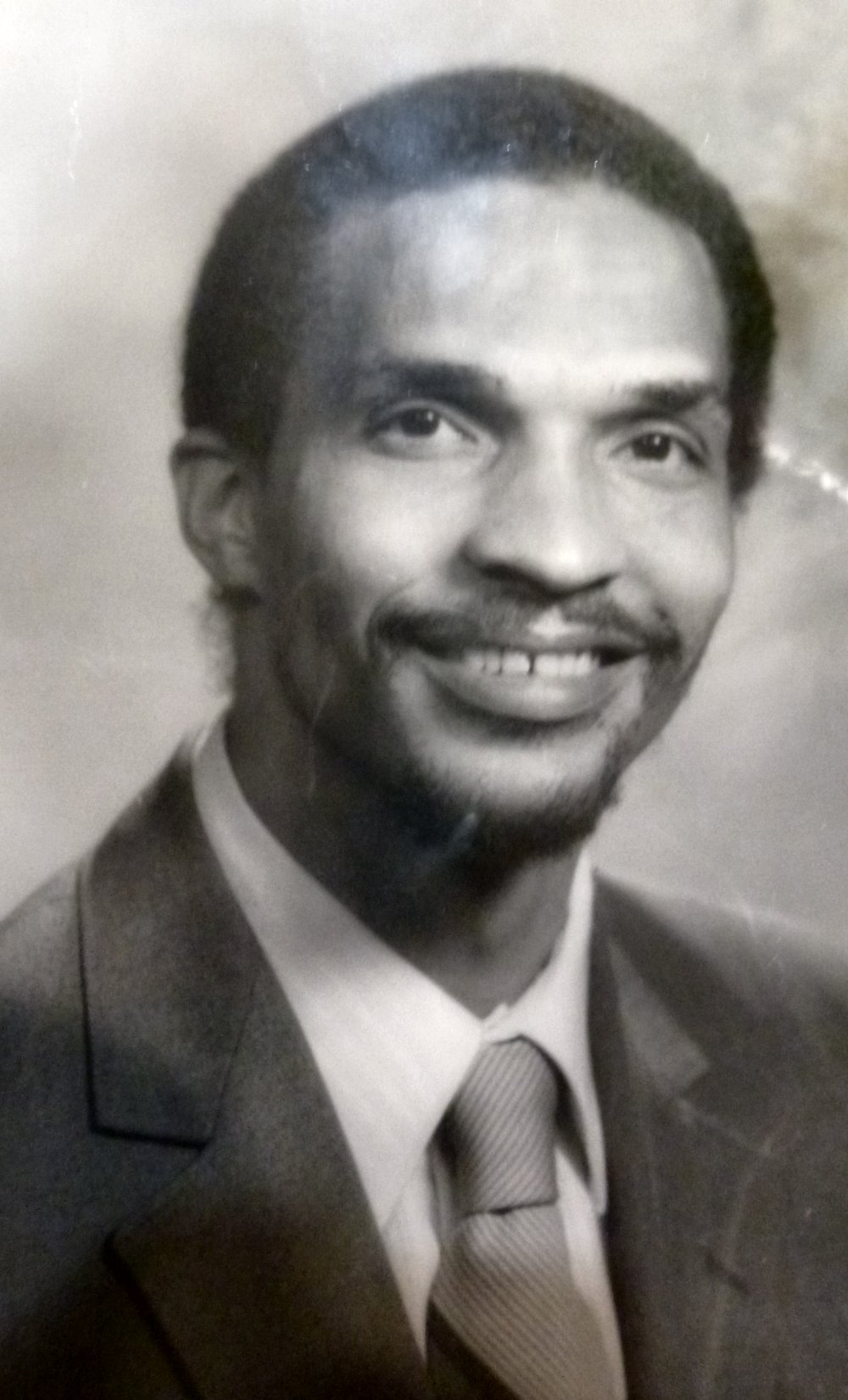
Michael Leverne Esters (1951-1983)
ESTERS BOULEVARD
Esters Boulevard was named for Michael Leverne Esters (1951-1983). Michael was born on May 25, 1951 to Rehofus Esters (1923-2014) and Barbara Carter Esters. He graduated from Notre Dame High School at Biloxi, Mississippi and attended Mississippi Gulf Coast Junior College and Clark College in Atlanta, Georgia. In April 1977, Michael married Gail Rose Tyler. They were the parents of Imari Esters, a son.(The Daily Herald, March 25, 1983, p. 2 and Harrison Co., Mississippi 2nd JD MRB 14, p. 525)
Michael L. Esters was employed by the City of Biloxi and was the first Black Councilman elected to the Biloxi city government. Michael was elected to represent the people of Ward II in 1981. He was killed in an automobile accident on March 24, 1983. Michael and his family were domiciled at 641 Fayard Street. They worshiped at our Mother of Sorrows Catholic Church on Division Street.(The Daily Herald, March 24, 1983, p. 1 and March 25, 1983, p. 2)
Michael was chairman of the Black Civil Rights Organization at Biloxi.
Esters Boulevard was named by the Biloxi City Council in ? to honor Michael L. Esters It runs eastward from Bohn Street to ? and was formerly called Railroad Street.
Mr. Rehofus "Rea" Esters Sr. went home to his Heavenly Father Mon., 9/22/14 in Ocean Springs, MS at the age of 91 years. Rehofus was born in Biloxi, MS to Othella Nelson Burrell and Halsey Staples. He and his brothers were raised by Nelse Esters. He attended Our Mother of Sorrows Catholic School and graduated from Jackson State College. He served his country during WWII in the US Navy and retired from KAFB as a Supervisory Training Instructor in Electronics for the 3395th Technical Training Group in 1980.
Rehofus was preceded in death by his son, Michael L. Esters, father, Halsey Staples, mother, Othella Burrell, and brothers, Alphonza Esters Sr. and Frederick Esters Sr.
He is survived by sons: Rehofus (Yolanda) Esters Jr., Dr. John (Mariela) Esters, Gail Tyler-Esters, Steven (Pamela) Esters, and Kelvin (Llatetra) Esters; daughter: Lavaleria "Cookie" Alphonse White; sisters: Hestra Polk, Sandra Bynum, Joan Staples, and Miriam Myree; 16 grandchildren and 14 great grandchildren.
Services will be Noon Tues., 9/30/14 at Victory International Christian Center, 8401 Ocean Springs Rd. in Ocean Springs. Visitation will be 2 hours prior to service time. Burial will follow at Biloxi National Cemetery.
Read more here: http://www.legacy.com/obituaries/sunherald/obituary.aspx?n=rehofus-esters&pid=172603683&fhid=21452#storylink=cpy
REFERENCES:
The Daily Herald, “Michael Esters”, March 24, 1983.
The Daily Herald, “Michael Esters”, March 25, 1983.
The Daily Herald, “Local civil rights officer critizes arrest of [James] Black”,
The Sun Herald, 'Rehofus Esters', September 28, 2014.
FATHER RYAN
REFERENCES:
The Daily Herald, “”,
The Daily Herald, “”,
The Daily Herald, “”,
The Daily Herald, “”,
FORREST AVENUE
REFERENCES:
The Daily Herald, “”,
The Daily Herald, “”,
The Daily Herald, “”,
The Daily Herald, “”,
The Daily Herald, “”,
The Daily Herald, “”,
The Daily Herald, “”,
GLENNAN AVENUE
In the spring of 1914, H.E. Latimer and his work crew of eight men and mule teams began to cut a road into the Naval Reserve Park from Pass Christian Road. Called Glennan Avenue, the new road went north from Pass Christian Road for 1/4 mile and turned west for 1/4 mile to the site of the new cemetery. There were still virgin pine and gum trees in this area of Biloxi.(The Daily Herald, June 2, 1914, p. 1)
REFERENCES:
The Daily Herald, 'Glennan Avenue now gives access to the cemetery', June 2, 1914.
HOLLEY STREET
REFERENCES:
The Daily Herald, “”,
The Daily Herald, “”,
The Daily Herald, “”,
HOPKINS BOULEVARD
REFERENCES:
The Daily Herald, “”,
The Daily Herald, “”,
The Daily Herald, “”,
The Daily Herald, “”,
The Daily Herald, “”,
The Daily Picayune, “”,
The Daily Picayune, “”,
The Daily Picayune, “”,
HOWARD AVENUE
This major east-west artery through Biloxi was original known at the Pass Christian-Point Cadet Road or Pass Road. In 1896,
In January 1899, C.W. Blake, Street Commissioner, was supervising excellent work on Howard Avenue. Since the roadway was narrow, it was difficult to create the necessary pitch to properly drain the road as the street at the gutters was higher than the center. The street car track would have to be raised or the gutters lowered several inches to create a slope that would adequately drain the roadway.(The Biloxi Daily Herald, January 20, 1899, p. 8)
REFERENCES:
The Biloxi Daily Herald, “Local and Personal”, January 20, 1899.
The Daily Herald, “”,
The Daily Herald, “”,
The Daily Herald, “”,
The Daily Herald, “”,
The Daily Herald, “Brick laying began today”, June 9, 1924, p. 3.
The Daily Herald, “”,
The Daily Picayune, “”,
The Daily Picayune, “”,
The Daily Picayune, “”,
The Daily Picayune, “”,
The Daily Picayune, “”,
The Daily Picayune, “”,
The Daily Picayune, “”,
HOXIE
The Daily Picayune, “”,
The Daily Picayune, “”,
The Daily Picayune, “”,
IRISH HILL
‘Irish Hill’ mentioned in newspaper in September 1903, Frank and Herbert Schaffer living here.(The Biloxi Herald, September 4, 1903, p. 6)
The Biloxi Daily Herald, “City News”, September 4, 1903.
The Daily Herald, “”,
The Daily Herald, “”,
The Daily Herald, “”,
The Daily Herald, “”,
JULIA AVENUE
In May 1909, the City of Biloxi led by Mayor T.J. Rosell (1861-1923) passed City Ordinance No. 421 which quitclaimed a strip of land forty feet wide [east to west] and one thousand one hundred and seventy-two feet long [north to south] to Erena Lopez Brady. This strip of land ran north between West Beach Boulevard and Cemetery Street and known as Julia Avenue. It had been dedicated for a street to be named for Julia Dulion Lopez, Mrs. Brady’s mother.(Harrison Co., Mississippi Land Deed Bk. 91, p. 316 and The Daily Herald, May 10, 1909, p. 4)
KELLER AVENUE
JOHN H. KELLER
John Henry Keller (1830-1908) was born in Germany or Switzerland. Married Elizabeth Gresser, also German. She expired at NOLA on April 18, 1882. Their children were:
Married Martha Washington Silk (1853-1913) at New Orleans in November 1888.
PRESBYTERIAN CHURCH LOT
On July 26,1892, the great New Orleans philanthropist, John Henry Keller (1830-1908), himself not a Presbyterian, donated Lot 1 (50 feet by 150 feet)-Block 6 of Keller's tract to the Biloxi Presbyterian Church. The church was located on East Howard Avenue east of the old Biloxi Public High School. W.L. Covel (1836-1926) was contracted to erect the 'small and modest building" of the newly organized congregation. The deacons and elders of the Biloxi Presbyterian Church, among them Bemis O. Bailey (1898-1969), an Ocean Springs native, sold their property to the City of Biloxi in late December 1940, for $3659.(Harrison Co., Ms. Land Deed Bk. 28, p. 205 and The Biloxi Herald, July 2, 1892, p. 1 and July 16, 1892, p. 4)
The Biloxi Herald,“”,
The Biloxi Herald,“”,
The Biloxi Herald,“”,
The Biloxi Herald,“A noble gift”, July 2, 1892.
The Biloxi Herald,“a new church”, July 16, 1892.
The Biloxi Daily Herald, “”,
The Biloxi Daily Herald, “”,
The Biloxi Daily Herald, “”,
The Biloxi Daily Herald, “”,
The Daily Picayune, “”,
The Daily Picayune, “”,
The Daily Picayune, “”,
KUHN
The Daily Picayune, “”,
The Daily Picayune, “”,
The Daily Picayune, “”,
LAMEUSE STREET
Lameuse Street is a north-south striking thoroughfare located in Central Biloxi between Main Street and G.E. Ohr, formerly Delauney Street. It’s name come from Rene’ Lameuse (1788-1883), a native of Haiti. Lameuse had settled at New Orleans as early as 1827, since Louise Appoline Lameuse (1827-1892), his daughter, was born here at this time. His spouse, Angelique Lameuse, died at Biloxi in 1829. She is buried in the Old Biloxi Cemetery. Circa 1845, Louise A. Lameuse married Urbain Laroussini (1815-1899), a native of France, and merchant and resident of the Crescent City. They reared a large family at New Orleans on Villere Street.
Rene’ Lameuse acquired a one arpent tract of land at Biloxi in July 1831 from Lansent Gazone. It ran north from the Beach to Bayou Auguste [present day Bradford Street] and was bounded by Joseph Ladner to the east and the lands of Jean Delauney [now Lameuse Street] to the west.(Cassibry, Vol. II, 1986, p. 8)
Urbain Laroussini v. Heirs of John B. Carco
In a deposition from Urbin [sic] Laroissini [sic] v. Heirs of John B. Carcos filed by Urban Laroussini in August 1849, in the District Vice Chancery Court at Mississippi City, Jean Delauney in February 1850 related that: Lameuse took possession about ten to fourteen years ago and built a brick house upon it and about two or three years afterwards. The improvements in 1844 was a brick house, kitchen and framed house, where Briscoe lives, on the front and a house and kitchen where Madame Seaman now lives on Back Bay.(Cassibry, Vol. II, 1986, p.32)
Louis A. Caillavet in January 1850, was deposed in the same litigation and related: I know the road now called Lameuse. There was no road there in 1815 or 1818. The road was first established after Lameuse went onto possession; there was no road there previous to 1836.(Cassibry, Vol. II, 1986, p.23)
Larned Davis of Pass Christian another deposer in Laroussini v. Heirs of J.B. Carco related the following in February 1850: I came to Biloxi in June 1835 and stayed there only eight months. I do not Lameuse was there in 1835. The land was all uncultivated and there were no improvements on the land. In the summer of 1838 Lameuse told me that he had built a road and that it was his road and offered to sell me some lots on the east side of the road. In 1838 there was a small shop where groceries were sold and some other improvements, but cannot say what they were and to what extent the land was improved.(Cassibry, Vol. II, 1986, p.23)
Biloxi
While a resident of Biloxi, Rene Lameuse was active in social and political affairs. He was elected the first to the first Board of Police of Harrison County, Mississippi which met on July 6, 1841. Mr. Lameuse’s tenure was short lived on this board as he resigned during the September 1841. Rene Lameuse protested that the Board of Police of Harrison County was not legal because the law authorizing the Board required that the first meeting be held in Biloxi. Lameuse resigned from the Board and was fined $10.(Minutes of the Board of Police Bk. 1, September 13, 1841, p. 6)
In 1850, Rene Lameuse was a resident of Biloxi domiciled on Front Street. He became an American citizen in 1856, while living at Biloxi. Mr. Lameuse returned to New Orleans and lived out the remainder of his life with Urbain Laroussini, his son-in-law, and family. He expired in the Crescent City on April 30, 1883 at the age of ninety-five years.(1850 Harrison Co., Mississippi Federal Census M432_372, p. 95)
Shady Grove
In June 1850, John Coates was operating the Shady Grove resort at Biloxi. It was described as: large lawn and great number of shade trees surrounding the house make this one of the most desirable for families along the seacoast. Attached to this house are large and commodious bathing houses. Rates: $1.25 per day; $7 per week; and $30 per month.(The Daily Picayune, June 8, 1850, p. 8)
1875
The Shady Grove Hotel has undergone an entire renovation and refurbishing under the guidance of Urbain Rambaut (1832-1889), the proprietor. Mr. Rambaut was born in France and settled at New Orleans where he owned a coffee house and barroom on Decatur Street. Rambaut pledges to outdo his service of prior years to his patrons. Back Bay furnishes the finest fish for his table and Professor Knapp drives a fine buggy to deliver visitors from their arrival as well as giving driving tours of Biloxi. He knows the denizens well and imparts valuable information of the area for the curiosity and knowledge of his passengers.(The Star of Pascagoula, June 26, 1875, p. 1 and 1870 and 1880 Orleans Parish, Louisiana Federal Census M593_522, p. 382, 6th Ward and T9_461, p. 3, ED 33)
Peter Lienhardt, et al v. Sherrod Seaman, et al
In May 1874, Chancellor W.G. Henderson of the Chancery Court of Harrison County, Mississippi opined and adjudicated in the partition suit of Chancery Court cause No. 143, Peter Liendhardt et al v. Sherrod Seaman et al. This litigation involved the partition of the ‘Lameuse Property’ also called the ‘Shady Grove Hotel’ at Biloxi. This tract was described in this law suit as“containing by estimation forty arpents of land [more or less] bounded and described as follows. Beginning at the Beach at the Pass of Biloxi, thence north to the Back Bay of Biloxi; thence southeast along the shore of said Bay so as to include one arpent; thence south to the said Pass of Biloxi; thence to the place of beginning. Bounded south by the Pass of Biloxi or Gulf of Mexico; north by the Back Bay of Biloxi; west by Lameuse Street; east by Wetzell heirs having a few small lots sold off.
(Biloxi Cemetery Bk. A, p. 21)
Richard Lameuse (Biloxi Cemetery Bk. A, p. 234)
Circa 1845, Louise A. Lameuse married Urbain Laroussini (1815-1899), a native of France, and merchant and resident of the Crescent City. They reared a large family at New Orleans on Villere Street.
Biloxi
In 1850, Rene Lameuse is a resident of Biloxi domiciled on Front Street. He became an American citizen in 1856, while living at Biloxi. Mr. Lameuse returned to New Orleans and lived out the remainder of his life with Urbain Laroussini (1815-1899), his son-in-law, and family. No further information.(1850 Harrison Co., Mississippi Federal Census M432_372, p. 95)
1894
The City Council appointed Aldermen Gleason, Dulion, and Louge to meet with land owners on Front Beach between Lameuse Street and Porter Avenue to secure 40 feet of land to build a road.(The Biloxi Herald, January 6, 1894, p. 1)
1902 Ordinance
The Biloxi City council passed an ordinance to sell privledges for using streets for the construction of wharves. The foot of Lameuse Street was the most valuable as its asking bid had a minimum rent of $50 per year for a six year lease. Biloxi’s other streets were non-bid and had a fixed rental rate of $10 per year for six years. The City prohibited oyster shops for being built on any of these piers. Bathhouses and warehouses were allowed.(The Biloxi Daily Herald, May 8, 1902, p. 8)
1922 speeders
Residents of Lameuse Street complained that automobiles were being driven at speeds above that set by the City ordinance on their thoroughfare. Twenty children reside on Lameuse Street between the L&N Railorad and Division Street and their safety is at risk due to cars traveling at speeds between twenty-five and fifty miles per hour. The police claim that efforts have been made to catch speeders.(The Daily Herald, September 23, 1922, p. 4)
REFERENCES:
Nap L. Cassibry II, Early Settlers and Land Grants at Biloxi, Volume I, (Mississippi Coast Historical and Genealogical Society: Biloxi, Mississippi-Special Issue 5, November 1986), p. 82.
Nap L. Cassibry II, Early Settlers and Land Grants at Biloxi, Volume II, (Mississippi Coast Historical and Genealogical Society: Biloxi, Mississippi-Special Issue 5, November 1986).
The Biloxi Daily Herald, “New Ordinance passed”, May 8, 1902.
The Daily Herald, “Complains of fast driving”, September 23, 1922.
The Daily Herald, “Howard Avenue open to Lameuse”, June 13, 1924.
The Daily Picayune, “Shady Grove, Biloxi”, June 8, 1850.
The Star of Pascagoula, “Our Watering Places”, June 26, 1875.
MAIN STREET
REFERENCES:
The Daily Herald, “”,
The Daily Herald, “”,
The Daily Herald, “”,
The Daily Herald, “”,
MORRISON AVENUE
"...Morrison Avenue, a new street cut through from the beach toward the railroad and some distance west of the cemetery..." [The article was reporting a fire that burned three newly built cottages on Morrison.](The Biloxi Daily Herald, June 27, 1906)
REFERENCES:
The Biloxi Daily Herald, “”,
The Biloxi Daily Herald, “Another big fire last night”, June 27, 1906.
The Daily Herald, “”,
The Daily Herald, “”,
NIXON STREET
REFERENCES:
The Daily Herald, “ ‘District’ woman takes poison”, September 14, 1914.
The Daily Herald, “Defendants acquitted”, July 23, 1915.
The Daily Herald, “Red light part of Biloxi raided by Deputy Walker”, August 5, 1915.
The Daily Herald, “Arrests ordered by Committee on Police of Biloxi”, February 19, 1916.
The Daily Herald, “”,
PORTER AVENUE
John C. Porter had acquired a one-half acre lot on the Gulf at Biloxi, Mississippi from John Fayard before 1848. On Christmas Day 1848, he sold this tract to Rebecca Flanagan and Francis Henrietta Thompson, the daughter of george and Margaret Thompson, now Margaret T. Brown, with his 'natural love and affection'. The lot was surveyed by Elihu Carver.(Harrison Co., Mississippi Chancery Court Land Deed Bk. 4, p. 205)
In May 1850, John C. Porter conveyed for $250 a tract of land north of Pass Christian Road to John H. Powell.(Harrison Co., Mississippi Chancery Court Land Deed Bk. 5, p. 296)
REFERENCES:
The Daily Herald, “”,
The Daily Herald, “”,
The Daily Herald, “”,
The Daily Herald, “”,
__________________________________________________________________________________________________
QUERENS AVENUE
1.JPG)
FREDERICK C. QUERENS
REFERENCES:
The Daily Herald, “”,
The Daily Herald, “”,
The Daily Herald, “”,
____________________________________________________________________________________________________
RAILROAD STREET
REFERENCES:
The Daily Herald, “Begin work of paving”, April 4, 1924, p. 3.
The Daily Herald, “”,
The Daily Herald, “”,
The Daily Herald, “”,
REYNOIR STREET
REFERENCES:
The Daily Herald, “”,
The Daily Herald, “”,
The Daily Herald, “”,
RODENBURG
Named for John Henry Rodenberg (1810-1862+), a German immigrant merchant, who settled at New Orleans. He acquired 4 lots of land about 3 miles west of the Village of in Biloxi in May1852 for $560 from Maunsel and Heloise White of Plaquemines Parish, Louisiana. Each lot meausre 1 arpent on the Mexican Gulf and ran north for about 16 arpents.The Rodenberg Tract contained about 60 acres. Also 768 feet on the Gulf and ran north for about 3100 feet.(Harrison Co., Mississippi Deed Bk. 6, p. 353)
REFERENCES:
The Daily Herald, “”,
The Daily Herald, “”,
The Daily Herald, “”,
The Daily Herald, “”,
The Daily Herald, “”,
The Daily Herald, “”,
The Daily Herald, “”,
The Daily Herald, “”,
The Daily Picayune, “”,
The Daily Picayune, “”,
The Daily Picayune, “”,
The Daily Picayune, “”,
ROSE STREET
[became ROSETTI STREET in May 1972]
Rose Street was changed to Rosetti Street by the Biloxi City Council in May 1972 to honor Biloxi Police Chief Louis A. Rosetti. Residents of Rose Street petitoned the City for the change. Mayor Daniel Guice related that the name change was not only in recognition of the late police chief, but of the whole Rosetti family who had served Biloxi for many years. Guice stated also that "we all enjoyed a close relationship with Chief Rosetti. He was a person with a heart of gold. Not only would he enforce the law, but would give help whenever and wherever needed, especially to low-income groups. I hope this action will show younger persons that by living the good life and serving the community as Chief Rosetti did, they will not be forgotten."(The Daily Herald, May 9, 1972, p. 4)
REFERENCES:
The Daily Herald, 'Biloxi Council changes street name to Rosetti', May 9, 1972.
SEAL AVENUE
REFERENCES:
The Daily Herald, “”,
The Daily Herald, “”,
The Daily Herald, “Improving Seal Avenue”, January 10, 1925.
The Daily Herald, “”,
The Daily Herald, “”,
The Daily Herald, “”,
The Daily Herald, “”,
JUDGE SEKUL
John Marshall Sekul (1911-1984) was born at Biloxi, Mississippi on January 31, 1911 to Steve M. Sekul (1880-1966) and Elena Trebotich (1884-1970), both Croatian immigrants from Bobovisca on the island of Brac in the Aegean Sea off the Dalmatian Coast. Their children were: Alena Sekul (1909-2002) m. Peter Cerinich (1895-1930+); John M. Sekul (1911-1984) m. Elizabeth Marjorie Lamas (1917-1984); Jacobena Sekul (1913-2003) m. Percy J. Wetzel (1907-1980) and Andrew Gillich; Vincentia [Vitsie] Sekul (1915-2002) m. Alonzo Gabrich (1894-1948); Josephine Sekul (1918-1986) m. William Schaaf; and Clare B. Sekul (1922-2011+) m. Warren H. Hornsby (.
Education
John M. Sekul matriculated to Springhill College at Mobile and graduated from Loyola University Law School at New Orleans. He took the Mississippi bar exam in 1935 and in April 1935 spoke to the Biloxi Lions Club on the Biloxi seafood industry, a subject that he was intimately acquainted having been reared on East Third Street on Point Cadet.(The Daily Herald, April 2, 1935, p. 5)
Clare B. Sekul, John’s sister, also became a lawyer and his law partner in late May 1945 shortly after she graduated from the University of Mississippi Law School. At this time she became the 41st woman to be admitted to the Mississippi State Bar. Clare had attended the Harrison-Stone-Jackson Junior College at Perkinston before entering the pre-Law program at Ole Miss.(The Daily Herald, May 28, 1945, p. 7 and May 30, 1945, p. 7)
Family
On October 30, 1938, John M. Sekul married Elizabeth Marjorie Lamas (1917-1984), the daughter of Rudolph Lamas (1875-1939), a Biloxi seafood merchant, and Mary Catherine Coleman (1877-1944). John and Marjorie were the parents of Judy Sekul m. Seymour and Steve M. ‘Buzzy’ Sekul. (Harrison Co., Mississippi MRB 49, p. 244)
Demise
Judge Sekul died in the Biloxi Regional Medical Center on January 9, 1984. His corporal remains were interred in the Southern Memorial Park cemetery at Biloxi, Mississippi. Marjorie Lamas Sekul expired in
REFERENCES:
The Daily Herald, “John Sekul speaker before Lions Club”, April 2, 1935.
The Daily Herald, “Miss Clare Sekul receives law degree”, May 28, 1945.
The Daily Herald, “Miss Clare Sekul and John Sekul”, May 30, 1945.
The Daily Herald, “Mrs. Elena T. Sekul”, December 3, 1970.
The Daily Herald, “Attorney and former city judge Sekul dies in medical center at age of 72”, January 10, 1984.
The Sun Herald, “Alena Sekul Cerenich”, July 7, 2002.
SUTER PLACE
REFERENCES:
The Daily Herald, “”,
The Daily Herald, “”,
The Daily Herald, “”,
WHITE AVENUE
Judge Walter A. White (1854-1942) was born December 1, 1854 near Steen's Creek, Rankin County, Mississippi to Thomas S. White and Salina Smith. Married Harriett Enochs (1860-1880+), the daughter of Captain I.V. Enochs and Harriet Byrd. Their children: Cora White (1878) m. Gabriel H. McMorrough (1876-1974); Lula White (1881-1931) m. Reverend William O. Sadler (1875-1949); Laura White (1883-19); and Nell White (1886) m. Allan J. Watson
After the demise of his spouse, Judge W.A. White married her sister, Cora Enochs (1864-1934), in October 1890. Their children: Walter Enochs White (1891-1940) m. Besse Still (1890-1980); Harry KnoxWhite (1898-1899); John T. White (1901) m. Pauline
WHITE HOUSE HOTEL
REFERENCES:
Twentieth Century Coast Edition of the Biloxi Daily Herald: Historical and Biographical (George W. Wilkes & Sons: Biloxi-1902).
JOURNALS
The Daily Herald, “”,
The Daily Herald, “Have record attendance of guests”, September 2, 1924.
The Daily Herald, “Mrs. White dites at home”, September 7, 1934.
The Daily Herald, “”,
The Daily Herald, “Board OKs widening White Avenue”, August 8, 1980, p. B1.
The Sun Herald, “Save the White House Hotel”, December 26, 2011, p. A11.
The Daily Herald, “”,
The Daily Herald, “”,
The Daily Herald, “”,
The Daily Picayune, “”,
The Daily Picayune, “”,
The Daily Picayune, “”,
The Daily Picayune, “”,
The Daily Picayune, “”,
- 5623 views