TIMELINE
CIVIL WAR [1861-1865]
January 9, 1861 - Mississippi became the second state to leave the Union.
January 13, 1861 - Confederate forces occupy Ship Island.
March 4, 1861- Lincoln inaugurated President at Washington D.C.
April 12, 1861 - Bombardment of Fort Sumter, Charleston, S.C. by Confederate forces of P.G.T. Beauregard.
May 21, 1861-Company E, 'Biloxi Rifles', 3rd Mississippi Regiment, mustered into State service at Jackson, Mississippi.
July 21, 1861 - Battle of First Bull Run fought in Virginia.
September 18, 1861 - Company A, The Live Oak Rifles, 3rd Regiment Mississippi Infantry, were sworn into State service. They had been organized in the spring of 1861 by A.E. Lewis, State Senator James B. McRae, and the Ramsay Family of west Jackson County. Originally 48 volunteers. Organized with the intent of protecting the coast between Ocean Springs and West Pascagoula. They fought in Kentucky, Mississippi, Georgia, Tennessee, and the Carolinas.
September 16, 1861 - Confederate forces abandon Fort Twiggs and burn the brick lighthouse at Ship Island.
October 5, 1861-Company E, 'Biloxi Rifles', 3rd Regiment Mississippi Infantry, mustered into Confedrate service at Shieldsboro [Bay St. Louis], Mississippi.
December 4, 1861 - Vanguard of 18,000 Union troops lands at Ship Island under the command of Major-General Benjamin F. Butler for the assault of New Orleans.
December 31, 1861-Biloxi surrendered to Captain Melancton Smith of the US Navy.
March 1, 1862 - Ship launch from the USS Hartford anchored at Ship Island visits Biloxi and Ocean Springs. First Union soldiers to land at Ocean Springs. Did not see over ten people. Met John and Julia Egan, Irish immigrants. Egan was US Postmaster at Ocean Springs (1856-1861). Union soldiers took Egan's letter balance, fifty New Orleans newspapers, and a number of dilapidated guns, rifles, and muskets.
April 25, 1862 - Admiral David G. Farragut captured the City of New Orleans.
May 31, 1864 - After grounding off the extensive flats off Ocean Springs, the USS Cowslip and USS Narcissus, both gunboats, went about twenty-five miles up the Tchoutacabouffa River and destroyed salt works, boats and ferries. They also captured six pleasure yachts. Sawmills and logs were not destroyed. The USS Vincennes went up Fort Bayou to cut out a schooner. It had been scuttled, but two Confederate officers, Major Toby and Captain Wilkinson, were captured while they slept.
August 5, 1864 - Battle of Mobile Bay fought between Union Navy under Farragut and Confederate force under Franklin Buchanan.
November 30, 1864-Captain John P. Elmer (1842-1864), Company E., Biloxi Rifles, was killed at Franklin, Tennessee.
June 1947-The Lyman C. Bradford Post, VFW began planning for a memorial park between Lameuse and Main Street to honor Biloxians who lost their lives in WWI and WWI. The memorial was to cost $3500 and will be donated anonymously by a local citizen.(The Daily Herald, June 5, 1947, p. 13)
_______________________________________________________________________________________________
ROSTER COMPANY E-THE BILOXI RIFLES
George W. Andrews, pvt.,1st Sgt; George Armstrong, pvt., James Armstrong, pvt., 4th, 1st cpl., 5th, 2nd Sgt.; Jacob Baltz [1840-1901], pvt., 4th Sgt.; R. Saunders Bartlett, pvt.; Theobald Balius, pvt.; Charles Bellman, pvy.; F.M. Bennett, 3rd cpl.; John P. Bennett, pvt., 4th, 3rd cp;., 3rd Sgt.; Marion Bennett, pvt.; Charles Bertho, pvt.; E.W. Biggs, pvt.; Leopold Bitterwolf, pvt.; Bochard, E., pvt.; Bourdon, A., pvt., drummer; Simon Bowman, pvt.; A.L. Bradley, pvt.; D.N. Brakefield, pvt.; H.L. Brakefield, pvt., 3rd, 2nd cpl.; John C. Brasher, pvt.; John P. Elmer (1842-1864), 1st Lieut., Capt.;
UNIT BIOGRAPHIES
-1..jpg)
LEOPOLD BITTERWOLF
Leopold Bitterwolf (1844-1912) was a native of Baden-Baden, Germany and came to NOLA circa 1847. Leopold married Margaret Knox (1852-1891) and they were the parents of three children: William Bitterwolf; Mary Catherine Bitterwolf (1878-1940) m. Henry Kern; and Madeleine Bitterwolf (1882-1912).
Leopold Bitterwolf served the CSA from 1861-until at least the Battle of Franklin, Tennessee where he was wounded. He married Adelaide Louise Mestier (1870-1933) at NOLA in June 1892. Leopold died 3 Oct 1912 at NOLA and his corporal remains were interred in the Greenwood Cemetery in the Crescent City.
At Biloxi, Mississippi Leopold Bitterwolf (The Daily Picayune, New Orleans, Friday, October 4, 1912 and The Daily Herald, )
THE CAPTURE OF BILOXI*
In the Great War that followed the secession of Mississippi and the other Southern States, there were some little differences of sentiment and sympathy in Biloxi-as was natural in a population composed of elements so varied, and so largely of foreign origin, who had enjoyed the little opportunity for becoming imbued with the principle and traditions prevailing among the Southern people in general. Yet the great majority were faithful and loyal to their State and to the Confederacy and very few of them opposed or foresook, or betrayed , the glorious cause for which their brethern were contending. Some of them attested their fidelty to it with their blood, and many by participation in its hardships and trials. Besides these individuals who entered the service at other places, two companies of volunteers were raised and organized here. One of these the Biloxi Rifles was commanded by the young and gallant Captain John P. Elmer, who was killed with both of his lieutenants, at the blood battyle of Franklin. It was constituted a part of the 3rd Mississippi Regiment. The other, originally known as the 'Henley Invincibles' was raised and first commanded by Captain John L. Henley, still a resident of Biloxi. It was detailed as for service afloat, many of its men being sailors or fishermen. Captain Henley, being severely wounded while on duty with a gunboat in the Sound was retired, and afterwards elected Mayor of the town. Besides these troops there was a company organized for home defense , under Captain Fewell.
LOG ARTILLERY
No event of real importance occurred at Biloxi itself during the war. The nearest approach to it was the surrender of the town to a Federal fleet on the 31st of December 1861, an affair that was entirely bloodless and comic, rather than a serious nature. A so-called 'battery' had been constructed near the lighthouse, the defences consisting of several hundred coffee and corn sacks-donated by Jacob Elmer, Eqsuire, the father of Captain Elmer above mentioned, and still a valued citizen of Biloxi-filled with sand. Behind these were mounted two six pounder field pieces, one of them cracked and useless and only the other capable of being fired. The lack of artillery was supplied, however, by several wooden guns, of formidable dimensions, and more conspicuously mounted than, under other circumstances, would have been consistent with the principles of military prudence and secretiveness. The battery commanded the channel of approach, and whenever the Yankee vessels would draw nigh to reconnoiter-as they often did-coming within two or three miles, Mayor Henley with a few other citizens assisting him, would make a great showing of ramming and sponging and elevating and lowering their log artillery. This had for a very long time the desired effect of keeping the enemy at a respectful distance, and on one occasion actually saved from capture a schooner, laden with valuable and much needed supplies, which had run aground a mile or two to the westward, the sight of the guns deterring the blockaders from approaching her in their open launches. On the day above mentioned [December 31, 1861] however, they approached in formidable force, with three gunboats, a detachment of marines from the flagship Niagara, and two boats crews from the steamer Massachusetts, all under the command of Captain Melancthon (sic) Smith, of the latter.
A letter from Ship Island, published in a Boston newspaper soon afterwards, and preserved in the 3rd volume of the 'Rebellion Record', gives an account of what followed, which must be very amusing to those behind the scenes. The letter says that Captain Smith steamed up to within a mile of the fort in the gunboat having the lighest draught, the Lewis, while the other vessels anchored outside, but within range to support the movement. The Lewis carried a crew of one hundred men and a pretty formidable armament consisting of 'one twenty-pound, rifled, Parrott gun, two twelve-pound rifled guns for James projectiles, one twenty-four pound Dahlgreen (sic) howitzer, and two twelve pound howitizers. Not succeeding in drawing the fire of the battery Captain Smith decided to anchor and go ashore himself with a flag of truce.' (What a terrible thing it would have been for the fleet if he had succeeded in 'drawing the fire' of that battery.)
SURRENDER DEMANDED
The writer goes on to give a long account of the panic of the citizens, the interview of Captain Smith with the mayor, whom he describes as an old man about sixty-though our esteemed fellow citiizens can hardly be credited with more than three score even at this day, after the lapse of more than twenty years-the negotiations that followed, and the conditions of things in general. In reply to the mayor's inquiry as to the object of his visit, Captain Smith said: "I have come to demand the surrender of this town, with all its fortifications, batteries, vessels in the waters, and all military and warlike stores." Considering that the fortifications consisted only of sand bags that the home guards were armed only with shot guns, and that there was no ammunition for the log cannons, or even for the six-pounder field piece, it is no wonder the mayor should have asked an armistice of twenty-four hours before giving an answer to this astinishing demands. He must have had some difficulty in keeping his countenance-to say nothing of his guns. The Federal commander was inflexible, however, and would allow only one hour, at the expiration which his terms were accepted, and the fortifications, battery, warlike stores, and etc. were all unconditionally surrendered. A detachment was sent to take possession of the battery and its contents. The writer of the letter does not say a word about the wooden guns, but we learn from other information, that the officer in command of the party and most of his men, rolled in the sand in a burst of uncontrollable merriment, when they saw what it was they had been so long and cautiously watching from afar through their spyglasses.
Such was the memorable 'Capture of Biloxi', which the writer from which our account is partly derived, gravely narrates as if it were a great event. He adds a paragraph which may be worth quoting.
MALE POPULATION GONE TO WAR
"Though the town possessed many natural beauties and redeeming qualities, still everything bore a neglected appearance. The place seemed deserted and no signs of thrift or business were observed. The entire male population capable of of bearing arms had gone to the war, while old men and boys enrolled as home guards. There were not more than fifty men in the place and about five hundred women and children. If the town and hamlets of the North were to make similar sacrifices, how long would the rebels continue to defy the power of the Federal Government?"
It does not appear that the captors valued their new acquisition highly enough to make any effort to hold it, nor, as far as our information serves, did they ever visit the shore again at this point of the war.
*[Published originally in The Biloxi Herald on October 10, 1885, this was written by Major W.T. Walthall who interviewed the men who took part in this affair, and from the record that is mentioned in the article. The office and files of The Biloxi Herald were destroyed by fire in 1882 (sic) but a copy of this article has been preserved by the family of the author. Copied in May 1941 by H.B. Walthall and published in The Daily Herald, June 4, 1941, p. 5)
REFERENCES:
H. Grady Howell, Jr., To Live and Die in Dixie, A History of the Third Mississippi Infantry, CSA, (Chickasaw Bayou Press: Jackson, Mississippi-1991).
Charles L. Sullivan, The Mississippi Gulf Coast: Portrait of a People, (Windsor Publications: Northridge, California-1985).
The Daily Herald, "",
_________________________________________________________________________________________________
BEAUVOIR TIME LINE
1890-1899
The Biloxi Herald, "Local City News", November 21, 1896, p. 8.[A grand BBQ and basket picnic was planned for Perkinston on december 11, 1896. Public invited. Camp Beauvoir Confederate Veterans.]
Uncle Jake Hollingsworth who was Postmaster at Beauvoir died yesterday [January 29, 1897]. The deceased was well known in the city [Biloxi] and along the Coast and his host of friends will regret his death. The funeral took place today.[The Biloxi Herald, Local City News, January 30, 1897, p. 8]
1900-1909
The Biloxi Daily Herald, “City News”, November 10, 1901, p. 8.[J.J. King, former resident and postmaster at Beauvoir, was found dead at New Orleans in the Osborne House. he leaves a sister in Alabama.]
The Biloxi Daily Herald, “City News”, February 4, 1903, p. 6. [Formal transfer of Beauvoir to SCV-Ms.]
The Biloxi Daily Herald, “Beauvoir-James F. Wolfe, an age Veteran, Passes Away”, December 16, 1904, p. 6.[James F. Wolfe, one of the old veterans at Beauvoir died today of natural causes. He arrived here on December 14th and his 70 years weighed heavily upon him. He had not recovered from an attack of la grippe and came to Beauvour to die. The Mayor of Canton was notified by Manager Kemp and unless instructed otherwise, the funeral will take place at the Beauvoir home tomorrow. Deceased has no near relatives of whom the management of the home are aware.
The Biloxi Daily Herald, “Beauvoir”, November 6, 1905.[William Simmons, age 69 years, veteran of Co C-11th North Carolina, died at the Soldier's Home on November 6, 1905. He came to the home seven months agho from Madison County, Mississippi. His remains were interred in the Beauvoir Cemetery.]
The Biloxi Daily Herald, “National Convention of the Daughters of the Confederacy”, November 13, 1906, p. 4.[Met at Gulfport, Mississippi for four days, November 14th-November 18th, 1906. Not less than 600 women were expected to attend. The Beauvoir Chapter was represented by Mrs. Dr. Jackson [Laura Scott Jackson (1844-1922)] and Mrs. Doctor Bolton. (Olivia Hill Sones Bolton (1868-1952)]
The Daily Herald, “City News”, December 28, 1906, p. 4. Hugh F. Cochran (1831-1906) expired at Beauvoir on December 27, 1906. He came to the home in July 1905 from Scott County, Mississippi. Private Cochran served with the 35th Mississippi Infantry Regiment Company A.
The Daily Picayune, "Necrology-Robert Dunbar Shepperd", December 10, 1907, p. 16. Robert Dunbar Shepperd, age 73 years, died December 8, 1907 at Beauvoir. He served with Company D-Jeff Davis Legion. Robert came from Chickasaw County to Beauvvoir on March 16, 1905 with Margaret, his spouse. He suffered from wounds and old age. The Reverend Crawford of the Episcopal Church officiated at his graveside service in the Beauvoir Cemetery.
Captain J.M. Mosby became Superintendent of the Soldier's Home at Beauvoir in Ocotber 1908.(The Daily Herald,
1910-1919
The Daily Herald, “Biloxi", January 17, 1910, p. 8. D.B. Turnipseed, age 84 years, died at Beauvoir on 15 January. He came to Beauvoir from Sharkey County, Mississippi on July 29, 1908. Turnipseed served with CO K, 36th Mississippi Infantry.
The Daily Herald, “Confederate dies [S.L. Rice (1828 to 2-16-1912)”, February 16, 1912, p. 8.
The Daily Herald, “Beauvoir veteran dead [J.M. Twiner]”, October 31, 1912, p. 8.[CO B-18th Mississipppi Regiment. With General Longstreet and Army of Northern Virginia and a Appomattox with General Lee.
The Daily Herald, “Veteran dies [James M. Williams (1831 to 3-12-1915) ”, March 12, 1915.
The Daily Herald, “Death at Soldiers Home [Louisa Jane Smith (1827 to 12-2-1915)]”, December 4, 1915.
The Daily Herald, “Louisiana Veteran dies at Beauvoir [George W. Christy (1837-1916) CO A 7th Louisiana Infantry-New Orleans Tigers, admitted August 13, 1910] ”, December 4, 1916. p. 1.
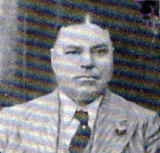
Elnathan J. Tartt (1876-1947)
Elnathan J. Tartt (1876-1947) became Superintendent of the Jefferson Davis Soldier's Home in May 1916.(The Daily Herald, May 8, 1916, p. 1)
Nathan B. Forrest, Adjutant-in-Chief and Chief of Staff of the Sons of Confederate Veterans, leaves today to arrange for the Reunion. (The Daily Herald, March 21, 1917, p. 3)
The Daily Herald, "W.B. Burdine [age 82 and a Georgia native who served with CO C 3rd Alabama Infantry and survived by his widow at the Soldiers Home] dead", June 16, 1917, p. 3.
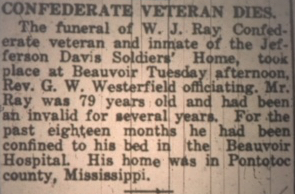
[from The Daily Herald, March 8, 1919, p. 3]
William J. Ray (1840-1919) was very likely born in Talahatchie County, Mississipppi. He was a resident of Thaxton, Pontotoc County, Mississippi in
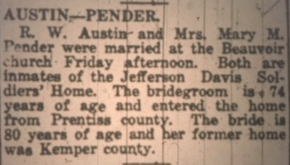
[from The Daily Herald, March 8, 1919, p. 3]
The Daily Herald, "Veteran dies at Home [William Marshall (1841-1919), age 78 years and a native of North Carolina, came to Beauvoir from Tallahatchie County, Mississipi in September 1915. He espired at the Beauvoir Soldiers' Home on August 17, 1919. Billy served with the 42nd North Carolina Infantry. Funeral were under the auspices of the Baptist Church with committal in Beauvoir Cemetery", August 18, 1919, p. 4.
1920-1929
The Daily Herald, “Double funeral [J.E. Mosier (1847-1920), from Charleston, Ms.-served under Gen. N.B. Forrest and P.C. Bell (1837-1920, from Liberty, Mus. CO E, 1st La. Cavalry)-internments in Beauvoir Cemetery ] at Soldiers Home”, March 22, 1920.
Ned Tartt (1902-1967) was awarded a special honor at his graduation from GMAC last week. Also Dr. Folkes gave him a $75 shot gun.(The Daily Herald, June 2, 1920, p. 3.)
The Daily Herald, “Confeds visit Biloxi [Three cars of the Gpt.& Ms. Coast Traction Co. take veterans fron Beauvoir to Biloxi]”, June 3, 1920.
The New Year's Day banquet at Beauvoir given to Confederate veterans and spouses by W.M. Lampton of Magnolia, Mississippi set a record as 600 pounds of fried chicken; 3000 Biloxi oysters; 30 gallons of turnip greens; 100 linear feet of jelly roll cake; 25 gallons of sweet milk and many other delicious delectables were served. The dinner cost about $350 and was paid for by Mr. Lampton/(The Daily Herald, January 1, 1921, p. 1)
The Daily Herald, “Dr. Folkes tells why $100,000 hospital is need at the Old Soldiers' Home", July 30, 1921, p. 1.
The Daily Herald, “[Elanathan] Tartt completes arrangements to carry Vets to Chattanooga free", October 22, 1921, p. 1. [The L&N RR, Pullman Company and Southern Railway provided 100 free passes for Confederated veterans to attend 60th Reunion at Chattanooga, Tennessee. Attending with the Beauvoir veterans were: Superintendent Tartt; his wife; Ned Tartt, his son; Dr. H.M. Folkes; Quinea Tarbutton, nurse; and two colored servants].
The Daily Herald, “Old soldier dead [Henry C. Williams (1845-1922)-CO I, 4th Alabama Cavalry-12th death here since January 2, 1922)”, March 4, 1922, p. 4.
The Daily Herald, "Contract let for Hospital", October 19, 1923, p. 1.
The Daily Herald, "New Hospital for Beauvoir will be completed in March", October 22, 1923, p. 1.
John A. Salley (1842-1923), spouse of Martha Cohron Salley (1851-1924) expired on June 26, 1923 in the hospital at Beauvoir. He was born at Bunker Hill, Mississipppi and served with CO E, 15th Mississippi Infantry during the Civil War. Internment at Evergreen Cemetery at Gulfport, Mississippi.[The Daily Herald, June 26, 1923, p. 3]
On December 16th, a fire at Beauvoir destroyed Dormitory No. 3 which was situated west of the old hospital. Two Confederate veterans perished in the conflagration, J.T. Hunter (1844-1924) and F.M. Sharp (1846-1924). They entered the Soldier's Home from, Laurel and Columbus respectively.[The Daily Herald, December 17, 1924, p. 1]
The Daily Herald, “Board praise Beauvoir home”, March 9, 1925, p. 3.
The Daily Herald, “Mississippi G.O.P. factions disagree over Beauvoir”, February 13, 1927, p. 2.
The Daily Herald, “Confedrate soldier dead”, June 6, 1928, p. 5. A.T. Daniel, age 81 years, who entered the Jeff Davis Soldiers Home in December 1925 died here June 6, 1928. He was a member of Blunt's Battalion in the Civil War. He is surviived by Mrs. C.P. Smith, a daughter at Gulfport. The body was taken to Jackson for burial.
The Daily Herald, “[Governor Thomas G. Bilbo] Bilbo presides at Beauvoir meeting”, February 13, 1928, p. 5.
The Daily Herald, “Three deaths at Beauvoir [Martha Garrett (1851-1929), Richard Trehorn, and Marie L. Casey (1847-1929)]”, January 19, 1929, p. 2.
The Daily Herald, “Reverend Elnathan 'Ned' Tartt, the Episcopal minister at Rolling Fork, Mississippi, announced his engagement to Miss Dorothy Porter of Shannon, Mississippi. Dorothy was a graduate of MSCW and the head of modern languages for the public schools of Jackson, Mississippi.”, March 18, 1929, p. 2)
The Daily Herald, “W. J. F. Lilly [age, 82-Co. A 43rd Mississippi Cavalry-entered home from Leake County. Mississippi survived by Lucinda Lilly, his spouse. Corporal remains interred in teh Beauvoir Cemetery] buried”, September 23, 1929, p. 8.
1930-1939
The Daily Herald, “Negro [George Green (1880-1930) ] injured in attack”, March 6, 1930, p. 2.
The Daily Herald, “Watermelons for Vets”, April 7, 1930, p. 2.
The Daily Herald, “Confederate graves marked”, April 29, 1930. In late April, 1930, sing the official bronze marker approved by the UVC, the Beauvoir Chapter of the UDC at Gulfport marked 30 Confederate veterans graves as follows: Mississippi City Cemetery-13 markers; Handsboro Cemetery-14 markers; and St. James Catholic Church Cemetery-3 markers.
The Daily Herald, “Beauvoir ready for guests”, June 2, 1930, p. 2.
The Confederate veterans hold their 40th Reunion at Biloxi. [see The Daily Herald, June 3, 1930, p. 1)
The Daily Herald, “Commends reunion soldiers”, August 1, 1930.
The Daily Herald, “Turnip green Tartt”, September 15, 1930, p. 2
The Daily Herald, “Trustees of Beauvoir meet”, 1932, p. 1.
T.L. Nichols, 84 year-old inmate of the Soldiers’ Home married Mrs. Alice Henshaw, age 65 years, a wealthy widow of Senatobia, Mississippi, who has been visiting at the home for four days. The groom has been in the home for two years coming from Marshall County. Their nuptials were witnessed by about 150 people. The newlyweds left for Senatobia, where they will reside at the home of Mrs. Nichols.The Daily Herald, “T.L. Nichols, 84, Mrs. A. Henshaw, 65, marry at Beauvoir”, January 19, 1932.
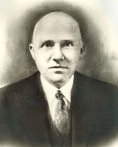
Joseph Wesley Havens (1881-1941)
Elnathan J. Tartt (1876-1947) was replaced by Joseph W. Havens as Superintendent of Beauvoir on July 1, 1932. Joseph 'Joe' Wesley Havens (1881-1941) was born May 24, 1881 at Vancleave, Jackson County, Mississippi to Abizer Havens (1858-1933) and Margarette Berry Havens (1849-1907). (The Daily Herald, June 13, 1932, p. 8)
The Daily Herald, “Celebration at Beauvoir”, June 7, 1933, p. 6.
W.F. Barclay, age 88 years and former member of Co H-18th Mississippi Regiment, died October 12, 1933, at Beauvoir. He had been visited by his wife and three sons from Magnolia, Mississippi.(The Daily Herald, October 14, 1933, p. 4 and October 19, 1933, p. 2)
J.H. Turner, age 102 years and native of South Carolina, served with Co J-41st Georgia Battalion died December 20, 1933. Buried Beauvoir Cemetery.(The Daily Herald, January 12, 1934, p. 10)
The Daily Herald, “Confederate Veteran [H. Walker in Battle of Shiloh at age 14 years. Lives 1624 3rd Street and served with CO F Baldwin Rifles-21st Alabama Regiment] taking Herald 29 years”, September 20, 1934, p. 1.
The Daily Herald, "Books presented [BHS] school", February 18, 1936, p. 1.
The Daily Herald, “Confederate Memorial Day”, April 25, 1935, p. 1.
The Daily Herald, "Memorial service [in memory of Jefferson Davis] in Church of Redeemer", June 1938, p.
The Daily Herald, "Military Crosses presented during program at Beauvoir", June 4, 1938, p. 6.
1940-1949
The Daily Herald, “Beauvoir shrine to open July 1”, May 2, 1940, p. 1.
The Daily Herald, “Sons & Daughters to restore Beauvoir”, May 7, 1940, p. 5.
The Daily Herald, “New directors for Beauvoir named”, May 9, 1940, p. 1.
The Daily Herald, “Honor Guard from [Camp] Shelby coming to Shrine dedication”, May 30, 1941, p. 9.
The Daily Herald, “Beauvoir preview will be Saturday”, February 6, 1941, p .1.
The Daily Herald, “Fine work accomplished in Beauvoir restoration”, February 8, 1941, p. 7.
The Daily Herald, “Will dedicate Beauvoir June 3”, February 10, 1941, p. 1.
The Daily Herald, “Jeff Davis Shrine to be dedicated today”, June 3, 1941, p. 1.
Recommittal of Samuel Davis (
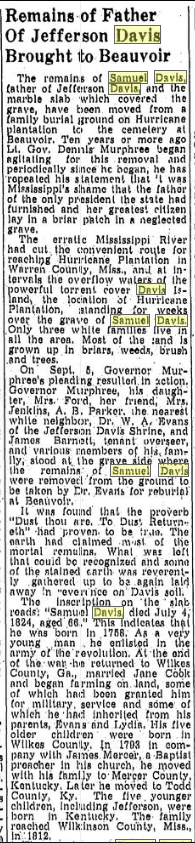
from The Daily Herald, September 9, 1942, p. 6.
The Daily Herald, "Children of Confederacy meet with Miss Redding", October 7, 1942, p. 2.
The Daily Herald, "Mrs. Roach dies [age 84 years, widow of J.M. Roach, Co. C, 24th Ms Cavalary-buried Beauvoir Cemetery]", January 19, 1944, p. 7.
The Daily Herald, “Children of the Confederacy”, February 10, 1944, p. 6.
The Daily Herald, "Last Confederate veteran [John Wesley Castles (1847-1944)] dies at Beauvoir", October 26, 1944, p. 1.
The Daily Herald, “Beauvoir group seeks to raise 250 thousand [dollars for tropical garden to perpetuate the memory of the Men in Gray]”, January 3, 1946, p. 1.
The Daily Herald, “Confederates leaving for their homes on Wednesday”, October 9, 1946, p. 1.
The Daily Herald, “Mrs. [Josie] Rankin assumes duties as Beauvoir Superintendent”, October 15, 1946, p. 1.
Mrs. Hattie Thompson, age 83 years, native of Bay Springs and an inmate at Jefferson Davis Home, died Tuesday night. Mary Glenn, Bay Springs, and Emma Kelly, Gainesville, Florida, her daughters, were at her bedside. Mrs. Thompson was also survived by a son, Charles Athcley of Taylorsville. Funeral services were from the Hospital Chapel by the Reverend C.G. Hodge. Internment was in the Beauvoir Memorial Cemetery.[The Daily Herald, July 21, 1948, p. 8]
Elnathan J. Tartt (1876-1947) expired at Meridian, Mississippi on January 17, 1947. Burial Magnolia Cemetery at Meridian.(The Daily Herald, January 18, 1947, p. 4)
The Daily Herald, “New Beauvoir Head [L. Marie Pearce] named”, August 3, 1948, p. 1)
L. Marie Pearce of Poplarville, Mississippi assumed duties of superintendent of Beauvoir on August 1st, replaceing Josie Rankin of Gulfport. Dr. B.Z. Welch named physician.
The Daily Herald, "12 inmates are now at Beauvoir"- [Marie Pearce, Superintendent. 400 widows and half dozen veterans eligible for admission. Some Board members at this time: Calvin E. Dees-Perkinston; Mrs. Ben Stevens-Hattiesburg; Mrs. A.C. Moore-Hattiesburg; Mrs. Bertha McInnis-Laurel; and J.J. Henry-Laurel], October 6, 1948, p. 1)
The Daily Herald, "Confederate Vets still undecided about final reunion", October 6, 1948, p. 1)
1950-1959
The Daily Herald, “Mrs. Davis' shawl added to Beauvoir museum collection”, April 14, 1952, p. 1)
The Daily Herald, “”, 19.
_________________________________________________________________________________________________
The 1st Battalion Mississippi National Guard was completed in early February. Dr. J.J. Lemon was promoted to Captain and named surgeon of the 1st Battalion. Harry T. Howard (1856-1930), Captain of the Jeff Davis Light Artillery, was promoted to Major, 1st Battalion of the Mississippi National Guard. Lt. Colonel E.W. Merrill was ill at his Moss Point home.(The Biloxi Herald, February 4, 1888, p. 8)
In February, Constantine Olivari (1841-1894) was elected Captain of the Jeff Davis Light Artillery in March to replace Captain Howard. Captain Olivari received his commission from Governor Lowry in late May.(The Biloxi Herald, March 10, 1888, p. 8 and June 2, 1888, p. 8)
The Lamar Guards, a military company of heavy artillery, was organized at Biloxi in January. Officers were: Henry J. Meaut (1842-1934), Captain; Carey Holliman (1860-1935) 1st Lieutenant;Thomas D. Bachino (1861-1891), 2nd Lieutenant; Joseph Ott (1855-1932), Sgt.-at-Arms; and Dan MCDonald, secretary. The officers were commissioned by Governor Robert Lowry (1831-1910) in March. Some of the Springfield Rifles and cartridges for the Lamar Guards arrived in February. Other founding members were: Dan Markey (1855-1900); Peter Gillen (1859-1898) M.J. Grady (1841-1898); Oscar Meaut (1859-1935); Joseph Arguelles (1865-1944); Sam Shaw; and John W. Henley (d. 1918).(The Biloxi Herald, January 21, 1888, p. 1, February 11, 1888, p. 8 and March 3, 1888, p. 8)
Time Line
Slightly over one-hundred ten years ago, the United States and Spain fought a short-term global war. Although the causes for this bellicose action is complex possibly being a combination of Spain’s long internal strife with the Cuban people, the aggressive nature of American capitalism, and yellow journalism by the American press, this conflict had its immediate cause at Havana, Cuba, where the USS Maine, a 318-foot long, American battleship, commanded by Captain Sigsbee, was mysteriously destroyed on February 15, 1898. Several hundred American service men, aboard the Brooklyn Navy Yard built vessel, were killed by a large internal explosion, possibly caused by spontaneous combustion of her coal bunkers. (The Pascagoula Democrat-Star, February 18, 1898, p. 2)
Republican President William McKinley (1843-1901) and the US Congress declared war on Spain on April 21, 1898. The Spanish-American War had several impacts on Mississippi and the South. The economy in the region improved, but the conflict was also the catalyst, which returned Southern people to the mainstream of American cultural life. The pangs of the Civil War defeat and Reconstruction were still felt in the South. The Spanish-American War united former enemies and a new sense of nationalism was reborn. As one former Confederate soldiers said, "if we couldn’t whip Uncle Sam in four years we shouldn’t allow someone else to come here and do what we couldn’t do ourselves". (McLemore-1973, p. 492)
1898
USS Maine, a 318-foot long, American battleship, commanded by Captain Sigsbee, was mysteriously destroyed on February 15, 1898.
Republican President William McKinley (1843-1901) and the US Congress declared war on Spain on April 21, 1898.
Thirty-one Biloxians volunteer to serve in what would become Company D of the 1st Mississippi Volunteer Regiment. This group of men was based in Scranton [Pascagoula], Mississippi and led by Edgar Rollins DuMont.(The Biloxi Daily Herald, May 14, 1898, p. 8)
Gus Henzelena, Jap Brugniens, John Andrews, Ed Weber, Walter Champlin, Jack King, William H, Smith encamped at Chickamauga, Tennessee returned to Biloxi for a thirty day leave.(The Biloxi Daily Herald, September 17, 1898, p. 8)
Private Emile Tremmel (1868-1898), a native of New Orleans, died of sickness at Camp Chickamauga, Tennessee, on August 26, 1898. His remains were accompanied to Biloxi by Gus Henzelena (1869-1953). (The Biloxi Daily Herald, December 22, 1898, p. 8, and August 27, 1898, p. 8)
James Sheasby (who left Biloxi to enlist in the US Navy several months ago has received his discharge. He was on the USS Buccaneer and saw active service at Santiago [Cuba].(The Biloxi Daily Herald, October 20, 1898, p.8)
1899
Corporal John Meunier and Private John Griffin of Heed’s [sic] Regiment are home again.(The Biloxi Daily Herald, June 27, 1899, p. 8)
1934
The Admiral P. Magruder Camp of Spanish American War veterans held a memorial service at the BYC in memory of the 266 men who were killed when the USS Maine sank in Havana Harbor on February 15, 1898. The H.D. Money Camp of Gulfport cooperated with the Biloxi camp in sponsoring the event which was attended by 45 Boy Scouts from Biloxi, representatives of various patriotic organizations, and invited guests of the camp and its auxiliary. E.J. Scott, commander of the Biloxi camp, presided over the gathering.(The Daily Herald, February 6, 1934, p. 2)
1936
The Reverend John Campbell of the Presbyterian Church to honor those American servicemen lost at Havana, Cuba on February 15, 1898, delivered a memorial address to members of the Admiral Thomas P. Magruder Camp, veterans of the Spanish-American War.(The Daily Herald, February 18, 1936, p. 3)
Admiral Thomas P. Magruder-Camp No. 19-Biloxi, Mississippi
William F. Jones, commander; F.J. Bettinger Sr., vice commander; Harry L. Moody Jr., vice commander; E.J. Scott, quartermaster; John M. Thomas, adjutant; John G. Whelen, officer of the day; James C. Banks, officer of the guard; E.C. Rowen, trustee; C.W. Trotter, trustee; E.E. Cooper, trustee; John R. Meunier; Major Wooters; Gordon W. Cogan; Amile Bonham; John Fayard; Anthony V. Foretich; Charles G. Elfers; and L.J. Rafferty.(Lang, 1936, p. 54)
1937
Marks P. Richardson, age 64 years, Spanish American War veteran, died at 8:55 p.m., March 5, 1937 at the veterans; Adminkstration. He was admitted on June 27, 1936. Marks enlisted in the US Army on May 10, 1898 and was honorably discharges on December 20, 1898, as a private in CO E, Ist Mississippi Infantry. Mrs. Francis McMasterts Richardson, his spouse, resides in the Como Hotel, at Jackson, Mississippi.(The Daily Herald, March 6, 1937, p. 2)
1941
Mrs. L. Holzer hosted the USS Maine Memorial services of the H.D. Money Camp and Auxiliary of the Spanish American War. Commander John L. Heiss served as master of ceremonies. John Brownlee, advanced the colors, and W.A. Thornton gave the invocation. Members of the auxiliary sang 'America' accompaied by Madame Lillye Violet Carrara. Ed Watts gave a short memorial talk and H.M. Harless provided the benediction. Refreshments were served by Mrs. Holzer.(The Daily Herald, February 18, 1941, p. 10)
Victor Muleon, commander.(The Daily Herald, February 20, 1941, p. 14)
1943
Leonard Hopkins (1875-1943), native of San Augustine, Texas and resident of Biloxi for over fifty years died at Biloxi on December 24, 1943 . Mr. Hopkins resided on Reynoir Street and served as a private in the 2nd Mississippi Volunteer Infantry.(The Daily Herald, December 27, 1943, p. 5.)
1983
Herman Miller (1880-1983), native of Sweden and Spanish-American War veteran, expired in the Minneapolis, Minnesota VA Hospital. He was national commander of the Spanish-American War Veterans in 1979-1980. Mr. Miller was recommended for the Medal of Honor by his commanding officer, but time, loss of records and the US Army prevented him from this courageous award.(The Daily Herald, April 11, 1983, p. A2)
Biloxi Volunteers
Biloxians who volunteered to serve their country in the Spanish American War joined the Scranton [Pascagoula] Company, which became Company D of the 1st Mississippi Volunteer Regiment. W.P. Henley, former Captain of Battery D, and Albert ‘Tab’ Irish Hann, formerly 1st Lieutenant of Battery A, both enlisted as privates. Hann had been elected to his post in November 1897.(The Biloxi Daily Herald, May 14, 1898, p. 8)
Henley and Hann left Biloxi in May 1898 to go to Jackson, Mississippi for interviews and medical examinations with the following Biloxians: A.J. Meynier; John Fayard; August ‘Gus’ Henzelena (1869-1953); Anthony V. Foretich [1856-1945]; John T. Andrews (1860-1908); Walter G. Champlin; Edward Caillavet (1874-1923); John Griffin; J. Lamy [sic]; B. Compus [sic]; W.F. Jones; Arthur E. Richard (1877-1949); John ‘Jack’ T. King; R. Anderson Dancer (1878-1915); Emile Joseph Pons (1865-1914); Harry Bowers; Jasper ‘Jap’ Brugniens [1877-1954]; John Rene Meunier (1880-1944); Leon Charles Meunier (1878-1922); William H. Smith; Nels J. Peters (1868-1935); John Dumar?; Gordon M. Dawson; W.D. Simms; James Williams; J.E. ‘Ed’ Weber; C.C. Harlan; and Sam Murray.(The Biloxi Daily Herald, May 14, 1898, p. 8)
After their excursion to Jackson, the following Biloxi volunteers were mustered into Company D, 1st Regiment, Mississippi Volunteers: Albert Hann [1878-1933], 1st Sgt.; Arthur Richards [1877-1949], 2nd Sgt.; John Fayard, Corporal; Leon C. Meunier [1878-1922], Corporal; Gus Henzelena [1869-1953], Cook; John T. Andrews [1860-1908]; A.V. Foretich [1856-1945]; Emile Tremmel [1868-1898]; Emile Pons; [1865-1914]; Ed Weber; John T. King; G.W. Champlin; G. Darson; H. Bowers; W. Jones; Jasper L. Brugniens [1877-1954]; John Peters; and W.H. Smith.[The Biloxi Daily Herald, May 21, 1898, p. 8]
Biographies
John T. Andrews
John T. Andrews (1860-1908) was born at Biloxi, Mississippi to George W. Andrews (1823-) and Caroline G. Andrews (1838-1886). He married Rosa Llado in Harrison County, Mississippi on February 15, 1882.(Harrison Co., Mississippi Circuit Court MRB 7, p. 342)
John T. Andrews expired at Biloxi on September 26, 1908. His funeral was held from the residence of his brother, Dudley Andrews, at 930 Lameuse Street. John was survived by his two brothers, George W. Andrews (1864-1909) and Dudley Andrews (1866-1939). His corporal remains were laid to rest in the Biloxi Cemetery.(The Biloxi Daily Herald, September 26, 1908, p. 4)
Anthony V. Foretich
Albert I. Hann (1879-1933) was born . He married Alice King (1879-1964) of Birmingham, Alabama. Expired December 1933. Three children: Cornelia Hann (1902) m. John G. West; Gelon Hann (1903); and Elizabeth ‘Betty Hann (1905-1991) m. Mr. Chastang and Ulric Seuzeneau (1902-1982). Buried Chalmette National Cemetery, Chalmette, Louisiana.
Emile J. Pons
US Navy
James H. Sheasby
James H. Sheasby (1877-1938) was born in England and came to America in 1898. He married Irene Helena Collier (1882-1958), a Mississippi lass, in Harrison County, Mississippi on April 8, 1901. They were the parents of eight children: Elvera Lucille Sheasby (1902-1955) m. Mr. Smith; James Collier Sheasby (1906-1971) m. Mildred Norman; Harold Sheasby (1908-1957); Elbert James Sheasby (1909-1968) m. Nell Stark; Marguerite Sheasby (1910-1988) m. Arthur L. Dickinson; Reynolds O. Sheasby (1913-2002); Charlotte Sheasby (1916-1990) m. Mr. Meyers; and Doris Sheasby (1919-2002) m. Richard M. Corkern (1917-1991).(Harrison Co., Mississippi Circuit Court MRB 13, p. 110)
After the Spanish-American War commenced, James H. Sheasby enlisted in the United States Navy. He was discharged in October 1898 and returned to Biloxi. While in military service he served on the USS Buccaneer [sic and probably USS Brooklyn] at the Battle of Santiago de Cuba in 1898.(The Biloxi Daily Herald, October 20, 1898, p. 8)
James H. Sheasby and family lived at 221 Kuhn Street in Biloxi. He made his livelihood as a marine engineer and boat captain. On October 14, 1906, James H. Sheasby was burned badly at Daigle’s Wharf in Houma, Louisiana when the gasoline boat that he crewed on exploded. He was employed by the Pelican Lake Oyster and Packing Company. Captain Peter Harvey appears to have been in command of the vessel which was a total loss and valued at $5000. Following the boating accident, Mr. Sheasby returned to Biloxi via New Orleans.(The Biloxi Daily Herald, October 16, 1906, p. 2 and October 31, 1906)
James H. Sheasby expired on December 7, 1938 at the US Marine Hospital at New Orleans. His corporal remains were interred in the St. Roch Cemetery No. 1 at New Orleans.(The Times-Picayune, December 8, 1938, p. 23)
US VOLUNTEERS -5th Immune Regiment
This unit, composed of men from Alabama, Mississippi, and Louisiana, was mustered at Columbus, Mississippi, in late July 1898. Colonel H. H. Sargent was in command. The 5th Immune Regiment was sent to Cuba to relieve the troops of General Shafter at Santiago de Cuba, after the fighting there had subsided. They performed garrison duty here from August 1898 until March 1899. Their chief enemy was malaria and yellow fever and the other pestilence which pervaded this tropical island. (Rowland-1978, p. 560).
The 5th Immune Regiment left Columbus, Mississippi on August 6, 1898, for Savannah, Georgia, their embarkation point for southeastern Cuba. The troop transports left Savannah on the 8th of August, and arrived at Santiago de Cuba on the morning of August 12, 1898. Major James K. Vardaman (1861-1930), who resigned from the editorship of The Greenwood Commonwealth to lead a battalion of soldiers of the 5th Immunes, wrote a series of letters to his wife, Anna Burleson Robinson Vardaman. They give a detailed picture of a soldier’s life and living conditions in the tropics. The Vardaman letters were published in The Journal of Mississippi History, in April 1947. Before the Spanish-American War, Texas native, J.K. Vardaman, was a lawyer-newspaper editor. He practiced law at Winona and was editor of The Winona Advance (1882). Vardaman relocated to the Delta and edited The Greenwood Enterprise-Greenwood Commonwealth from 1890-1903. Returning from Cuba, he entered politics and was elected as a populist Democratic Governor serving the State from 1904-1908, in that capacity. Vardaman was Mississippi’s U.S. Senator from 1913-1919. He became known as "the great white father". (Biographical Directory of the American Congress-1961, p. 1751).
Major James K. Vardaman led about 82 enlisted men from Mississippi to Cuba. These young men left home robust and healthy. At Cuba, seven died, twenty-five were sent home, and for the most part the remainder "looked more like half-animated cadavers than the stalwart men they were when the regiment first landed on Cuban soil". (The Pascagoula Democrat-Star, April 14, 1899)
In May 1899, the 5th US Volunteer Infantry was sent to Camp Meade at Middleton, Pennsylvania. They were mustered out in June 1899. (The Pascagoula Democrat-Star, May 19, 1899)
Biographies
William E. Ryan
Corporal William Edward "Will" Ryan (1877-1925)-William E. Ryan was the son of Antoine Ryan (1846-1908) and Marie Ryan (1846-1886+) of Ocean Springs, Missisippi. During the Spanish-American War, he served in Company A of the 5th Immune
After the conflict, Will Ryan worked on a steamboat in 1900, and moved to Biloxi circa 1907, where he worked for the Biloxi police force. Ryan later made his livelihood as keeper of the Biloxi Yacht Club. He married Theodora Vuyovich (1886-1944) of Biloxi. Their children were: Oliver Ryan (1907-1930+), Marshall J. Ryan (1910-1930), Theodora Ryan (c. 1914), Rayoal Ryan (c. 1917), and William Ryan. The family resided at 804 Reynoir Street. Will Ryan’s corporal remains were interred in the Biloxi City Cemetery. (The Daily Herald, December 2, 1925, p. 2, and Krohn, 1995, p. 16).
A son, Marshall J. Ryan (1910-1930), died of pneumonia in March 1930. He worked for the Mississippi Ice and Utilities Company. (The Daily Herald, March 15, 1930, p. 2)
REFERENCES:
Arthur Lang, History of Harrison County, Mississippi, (The Dixie Press: Gulfport, Mississippi-1936).
The Biloxi Daily Herald, ‘Latest City News’, November 27, 1897.
The Biloxi Daily Herald, ‘Biloxi furnishes her quota of Volunteers’, May 14, 1898.
The Biloxi Daily Herald, ‘Biloxi’s dead soldier [Emile Tremmel]’, August 27, 1898.
The Biloxi Daily Herald, ‘Local Brevities’, August 30, 1898.
The Biloxi Daily Herald, ‘Local and Personal’, September 10, 1898.
The Biloxi Daily Herald, ‘Local and Personal’, September 17, 1898.
The Biloxi Daily Herald, ‘Hood’s Immunes’, October 14, 1898.
The Biloxi Daily Herald, ‘Local and Personal’, October 20, 1898.
The Biloxi Daily Herald, ‘The [Emile Tremmel]monument unveiled’, February 21, 1899.
The Biloxi Daily Herald, ‘Local and Personal’, June 27, 1899.
The Biloxi Daily Herald, ‘Personal’, October 31, 1906.
The Biloxi Daily Herald, ‘Locals’, October 16, 1906.
The Biloxi Daily Herald, ‘Necrology-John T. Andrews’, September 26, 1908.
The Daily Herald, ‘Biloxian [Albert I. Hann]tells of work in Cuba’, April 18, 1912.
The Daily Herald, ‘Corporal William E. Ryan’, December 2, 1925.
The Daily Herald, ‘Marshall Ryan Dies’, March 15, 1930.
The Daily Herald, ‘Hann’, December 4, 1933.
The Daily Herald, ‘Memorial service for men who lost lives on the Maine’, February 6, 1934.
The Daily Herald, ‘Henry Coley buried’, February 16, 1934.
The Daily Herald, ‘Memorial Service’, February 18, 1936.
The Daily Herald, 'Leonard Hopkins dies', December 27, 1943.
The Daily Herald, ‘Spanish-American War vet dies’, April 11, 1983.
The Houston Chronicle, ‘Doris Sheasby Corkern’, July 4, 2002.
The Times-Picayune, ‘Murder victim believed to be Albert K. (sic) Hann’, December 5, 1933.
The Times-Picayune, ‘Services for Captain Sheasby’, May 6, 1938.
The Times-Picayune, ‘Hann’, May 6, 1964.
Some Biloxians who served in Company D, under Captain duMont were: Gus Henzelena (1869-1953), A.V. Foretich, Tom McCabe, W. Smith, John Fayard, and Emile Tremmel. Private Emile Tremmel (1869-1898), a native of New Orleans, died of sickness at Camp Chickamauga, Tennessee, in late August 1898 His remains were accompanied to Biloxi by Gus Henzelena. (The Biloxi Daily Herald, December 22, 1898, p. 8, c. 1 and August 27, 1898, p. 8, c. 3)
Also, Albert Irish Hann, son of Gelon Hann. (see DH, 12-4-1933, p. 1)
|
|
|
WORLD WAR I [1914-1918]
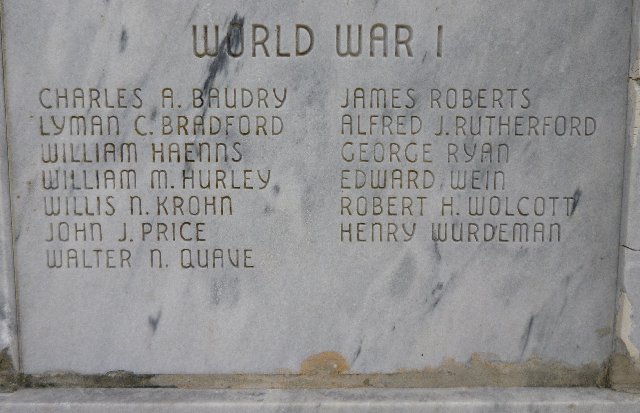
WWI MEMORIAL-GLENNAN PARK
East Beach Drive-US Highway No. 90
TIMELINE
June 28, 1914-Archdule Franz Ferdinand of Austria, the heir to the throne of Austria-Hungary was assignated in Serbia.
July 28, 1914-Serbia invaded by Austro-Hungarians followed by German invasion of Belgium, Luxembourg, and France and a Russian attack against Germany.
April 6, 1917-United States of America enters WW I.
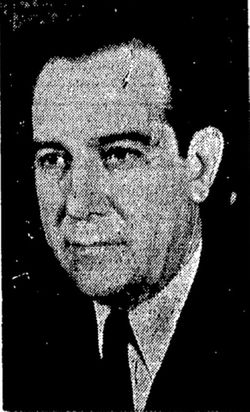
Thomas J. Grayson
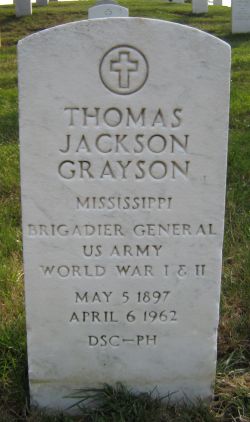
October 1918-Thomas J. Grayson, First Lieutenant, U.S. Army, 28th Infantry Regiment, 1st Division, A.E.F. Date of Action: October 2 - 3, 1918-General Orders No. No. 16, W.D., 1920-Citation: The Distinguished Service Cross is presented to Thomas J. Grayson, First Lieutenant, U.S. Army, for extraordinary heroism in action near Exermont, France, October 2 - 3, 1918. Lieutenant Grayson commanded a combat patrol which penetrated 2 kilometers into the enemy lines, and although twice attacked he maintained his position for 36 hours without supplies before returning to our lines with valuable information. The leadership and initiative displayed by Lieutenant Grayson were vital factors in the successful performance of this important mission.
November 11, 1918-Armistice Day.
January 1921-Edward Herbert Wolcott (1894-1918), who passed from pneumonia at Flanders Field Base Hospital No. 47 at Beaune, France on October 23, 1918, was buried on January 15, 1921 in the Biloxi Cemetery. Services were conducted under the auspices of the Catholic Church and pallbearers were selected from the Charles Baudry American Legion Post. A firing squad of eight men and a bugler under the command of a petty officer from the Gulfport Naval Station accompanied the body to its final resting place.The deceased was survived by his parents, Mr. and Mrs. H. Wolcott; five brothers, Oliver C. Wolcott; Ralph Wolcutt; Harold Wolcutt; Frank Wolcutt; and Payne Wolcutt; and one sister, Miss Lee Vicie. Edward was reared in Biloxi and resided here prior to enlisting inthe 1st Alabama Infantry at Mobile.(The Daily Herald, January 25, 1921, p. 2)
June 1947-The Lyman C. Bradford Post, VFW began planning for a memorial park between Lameuse and Main Street to honor Biloxians who lost their lives in WWI and WWI. The memorial was to cost $3500 and will be donated anonymously by a local citizen.(The Daily Herald, June 5, 1947, p. 13)
Former Biloxian, Brigadier General Thomas Jackson Grayson (1897-1962), son of George W. Grayson and Mamie Pol Grayson, died on April 6, 1962. Interment was in Arlington National Cemetery. He was former Adjutant General of Mississippi, head of the Mississippi State Draft Board and the husband of Elizabeth Dantzler (1901-1946).
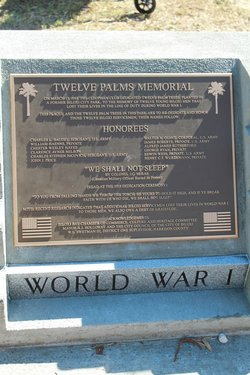
2014 Twelve Palms Memorial-Biloxi Business Men's Park
November 2014-The Biloxi Bay Chamber of Commerce through its Cultural and Heritage Committee re-dedicated the Twelve Palms Memorial on Veteran's Day 2014. The original Twelve Palms Memorial was created to honor the twelve Biloxians who lost their lives during World War I. The Biloxi Cleophan Club in March 1919,planted twelve palm trees in the L&N Park on the SW/C of Reynoir and Railroad Street, now called Esters Boulevard.(The Bilxoi-D'Iberville Press, November 7, 2014, p. 1)
____________________________________________________________________________________________
BILOXI WAR VETERANS
WWI
Captain John Meunier led Biloxi soldiers to Camp Beauregard on . His men were bivouacked in the Firemen’s Hall on Lameuse Street. In late May 1921, the flag pole that was set when they camped here was removed.
DEATHS
Men from Biloxi who died in training or participating in WWI are listed sequentially by their date of demise: George C. Ryan (1892-1917); Walter N. Quave (1886-1917); Charles L. Baudry (1891-1918); Alfred James Rutheford (1892-1918) James Roberts; Charles Nicovich (1892-1918); John J. Price; Clarence Avner Nelson; Edwin Wein (1898-1918); Chester Wesley Hayes; Henry C.T. Wurdemann (1888-1918); William Haenns (1890-1918), and Lyman C. Bradford.
In March 1919, a corrected list of 'Palm Soldiers', those from Biloxi who gave their precious lives for their country and fellow Americans, was published in The Daily Herald. A palm tree was planted in the city to honor each of these fallen heroes, as folows: Charles L. Baudry; William Haenns; Chester Wesley Hayes; Clarence Avner Nelson; Charles Nicovich; John J. Price; Walter N. Quave; James Roberts; Alfred James Rutherford; George Ryan; Edwin Wein; and Henry C.T. Wurdemann.(The Daily Herald, March 12, 1919, p. 3)
______________________________________________________________________________________________________________________
*Private George C. Ryan (1892-1917), the son of Beauregard Ryan and Virginia Vallen (1858-1928), was killed on April 23, 1917 near Enterprise, Clarke County, Mississippi when he was hit by a train. He was serving with the 1st Mississippi Infantry at the time. during World War I. Private Ryan's siblings were: Edward J. Ryan (1884-1963), Virginia R. Richards (1885-1963+), Richard Ryan (1887-1927), Ila Ryan Beaugez (1890-1914), Clarence Ryan (1895-1966), Samuel Ryan (1888-pre 1900), Homer Ryan (1905-1977), and Selma Ryan (b. 1897?).
______________________________________________________________________________________________________________________
Corporal Walter N. Quave (1886-1917), the son of Joseph Quave (1859-1928) died on December 27, 1917 at Camp Beauregard, Louisiana from pneumonia. He was a member of Troop B, Biloxi Calvary and was later transferred to a caisson company of the 114th Ammunition Train.(The Daily Herald, December 29, 1917, p. 1)
______________________________________________________________________________________________________________________
*Private Edwin Wein (1898-1918) died at Camp Beauregard, Louisiana on January 2, 1918. Edwin Wein was the son of John F. Wein (1851-1931), an 1871 Danish immigrant, and Anna Wein (1872-1910+), a native of NOLA. Initially John Wein and family lived on Lameuse Street, but by 1910 had moved to western Jackson County, Mississippi were he was a truck farmer. The Weins acquired land in the present D'Iberville community and in July 1919, they sold ten acres to Holen Hunter Grantham (1892-1964), who founded the Grantham Dairy. This tract was bounded by the following owners: north, B. Tucei; east, R.J. Quave; south, John Wein; and west, Louis Seymour.(1900 Harrison Co., Mississippi Federal Census T623_808, p. 22B, p. 21 and 1910 Jackson Co., Mississippi T624_744, p. 3B, ED 63 and 1910 Harrison County, Ms. Land Deed Bk. 126. p. 350)
The funeral of Private Edwin Wein was held at the residence of Mr. and Mrs. Robert Haas on Lameuse Street with internment in the Biloxi Cemetery. The body of Private Wein was brought to Biloxi by a representative of Caisson No. 2 of the Ammunition Train. Theodore W. Wein (1899-1982), stationed at Fort Worth, Texas, came to Biloxi for the funeral of his brother. He was also survived by a sister, Antoinette Wein Cress(1904-1925+).(The Daily Herald, January 4, 1918, p. 3 and January 5, 1918, p. 3)
__________________________________________________________________________________________________
*Private William Haenns (1890-1918) died May 10, 1918 at Camp Beauregard, Louisiana. His story is quite interesting. William Haenns, a native of Chicago, and Harry K. Barth wondered into Biloxi, Mississippi in early 1917 with their knapsacks and violins. They related that they had left Michigan for a walk as a 'study in human nature'. They planned a short tenure in the Queen City, but were widely accepted and appreciated for their musical talents. The troubadors not only entertained crowds with their violin, piano and vocal performances, but Haenns even directed the orchestra at the White House Hotel in the summer of 1917. The corporal remains of Private William Haenns were interred in the Biloxi Cemetery.(The Daily Herald, May 11, 1918, p. 3, The Sun Herald, September 18, 2011, p. F4 and September 25, 2011, p. F3)
______________________________________________________________________________________________________________________
*Alfred James Rutherford (1892-1918) was born at New Orleans on January 21, 1892 to Charles Frost Rutherford (1846-1923) and Laura R. Simmons (1861-1931). The Rutherfords, both native of the Crescent City, were married at New Orleans in January 1886. Their other children were: Charles H. Rutherford (1886-1889); John S. Rutherford (1888-1900+); Richard Shea Rutherford (1889-1922); Alice Edna Rutherford (1890-1914); Joseph Rutherford (1897-1900+); and Robert Rutherford (1900-1900+).(1900 Harrison Co., Mississippi Federal Census T 623_808, p. 15B, ED 31 and WWI Draft Registration-Harrison Co., Mississippi R1682923)
______________________________________________________________________________________________________________________
Charles S. Nicovich (1892-1918) was born September 28, 1892 at Mississippi City, Harrison Co., Mississippi to Marco Nicovich (?-1892), an Austrian immigrant, and Rosa Gondroun (1859-1952), a native of Louisiana. He was a single man and an employee of the Southern Pacific Railroad at Algiers, Louisiana and a resident of 5077 Dauphine Street in New Orleans when he registered for the miltary draft in 1917. Charles S. Nicovich passed on October 8, 1918 at Camp Merit, New Jersey, a victim of the Spanish influenza. His corporal remains were interred in the St. James Cemetery at Handsboro, Mississippi.(The Daily Herald, October 9, 1918, p. 3, October 14, 1918, p. 3)
Sergeant Nicovich was lauded by Major J.I. Sloat, his commander, as follows: "Sergeant Nicovich was an excellent soldier who was universally liked his officers and fellow soldiers, and his untimely death is a source of genuine sorrow to all. His death occured in the line of duty, and is no less honorable that had it occurred on the field of battle."(The Daily Herald, October 15, 1918,
_________________________________________________________________________________________________________________________________________________________
*Henry Charles Thomas Wurdemann (1888-1918) was born on November 7, 1888 at New Orleans, the son of Henry Wurdemann (1862-1936) and Bernadina Hoff (1870-1940). He passed from the Spanish influenza on October 10, 1918 at Camp Fortress, Virginia. Private Wurdermann had been trained at San Antonio, Texas and was stationed in Virginia at the time of his demise in October 1918. He was a member of the 29th Balloon Company, Air Service U.S. Army. Private Wurdemann was survived by Lovinia Fayard Wurdemann, his wife, parents, and several sisters and brothers.(The Daily Herald, October 11, 1918, p. 3)
The Henry Wurdemann family came to Biloxi from Derbigny Street in New Orleans circa 1904 and settled on ‘The Point’ on First Street. Both Henry Wurdemann and Henry C.T. Wurdemann were employed in the seafood industry at Biloxi as a fisherman and shell grinder respectively. By 1910, the Wurdemann family consisted of eight children extant, although Bernadina had birthed twelve: Henry C.T. Wurdemann (1888-1918); Augusta Wurdemann (1891-1908+) m. John Peter Baker; William Wurdemann (1895-1910+); Hazel Wurdemann (1896-1926); Frederick Wurdemann (1898-1910+); Alma Wurdemann (1902-1917); Mary Wurdemann (1904-1949) m. Lester Anton Narbo (-1960); Carl Wurdemann (1908-1908); and Ola Wurdemann (1909-1936+) m. Bill Thompson.(1900 Orleans Parish, Louisiana Federal Census T623_572, p. 3A, ED 67 and 1910 Harrison Co., Mississippi Federal Census T624_740, p. 26B, ED 33)
Private Wudemann’s corporal remains were brought to Biloxi by Corporal Neil Mooney who related the following to the local press: “Private Wurdemann was under me in performance of a number of duties. He seemed to be an expert rigger. He had a full military funeral side arms, preceded by the post band playing the dead march. It was very impressive. The casket was carried caisson to the depot. A large floral wreath, the tribute of his Company, together with two side American flags, came to this city with his body.”(The Daily Herald, October 14, 1918, p. 3)
Henry C.T. Wurdermann‘s corporal remains were interred in the Biloxi City Cemetery on October 14, 1918. Reverend Wabus, a Lutheran minister, presided at his burial service.(The Daily Herald, October 15, 1918, p. 3)
____________________________________________
James Roberts (1894 - 1918) was born, June 20, 1894, at Bayou La Mere, Plaquemine, Louisiana, son of Antonio James (Hymene) Roberts Sr.(1843 -1893) and Maria Gonzales Roberts. The Roberts were natives of Terre-Aux-Beoufs, St. Bernard Parish, Louisiana, Isleño descendants of the Canary Islands, Spain and natives of Louisiana.
Private James Robert was a resident of 438 Copp St. Biloxi, Mississippi. A single man, self-employed fisherman and among the Biloxians that left from Gulfport, Mississippi to Camp Greenleaf, Georgia, on July 26, 1918. He served as a member of the limited service division, a member of the Infantry. He died at Camp Server, South Carolina an October 11th, 1918, of the Spanish influenza, viral pneumonia. Private Roberts was survived by three sisters and four brothers along with his blind mother. He was waked at his mother's residence at 421 Washington Street at Biloxi with Father Milot, officiating. His corporal remains were interred in the Biloxi Cemetery on October 15t, 1918.(The Daily Herald, October 11, 1918 and October 14, 1918)
Six months after the passing of her husband on December 4th, 1893, Maria Gonzales Roberts (gave birth to Private James on June 20, 1984. She came to Biloxi with eight children: Matilda Roberts (dec. 1933), Carmela Roberts (dec. 1930), Josephine Roberts (dec.1989),Robert(1877-1964), William(dec.1930), Joseph(dec. 1938),and Victor Emile(1867-1959) and James Roberts (1894 -1918). Maria Gonzales Roberts (dec. 1931)is buried in the Biloxi Cemetery.[Courtesy of Barbara Acosta Perez, Picayune, Mississippi-May 28, 2014)
________________________________________________
*Charles L. Baudry (1891-1918), the son of Jules J. Baudry and Louise Comment, was born at New Orleans, Louisiana on September 1891. Joined US Marine Corps and served in France with Company I, 16th Infantry.
__________________________________________________________________________________________________
*Lieutenant Lyman C. Bradford (1888-1920) was the son of Lyman Bradford and Pearl Roberts. He was born at Biloxi, Mississippi on November 14, 1888. m. Maud Foxworth. Died at May 28, 1920.
Edward Herbert Wolcott (1894-1918), who passed from pneumonia at Flanders Field Base Hospital No. 47 at Beaune, France on October 23, 1918, was buried on January 15, 1921 in the Biloxi Cemetery. Services were conducted under the auspices of the Catholic Church and pallbearers were selected from the Charles Baudry American Legion Post. A firing squad of eight men and a bugler under the command of a petty officer from the Gulfport Naval Station accompanied the body to its final resting place.The deceased was survived by his parents, Mr. and Mrs. H. Wolcott; five brothers, Oliver C. Wolcott; Ralph Wolcutt; Harold Wolcutt; Frank Wolcutt; and Payne Wolcutt; and one sister, Miss Lee Vicie. Edward was reared in Biloxi and resided here prior to enlisting inthe 1st Alabama Infantry at Mobile.(The Daily Herald, January 25, 1921, p. 2)
__________________________________________________________________________________________________
*Recognized on WW I Memorial at Glennan Park in Biloxi, Mississippi.
REFERENCES:
1914
The Daily Herald, “Miss Rutherford dead”, April 22, 1914.
1917
The Daily Herald, “George Ryan killed”, April 23, 1917.
The Daily Herald, “Dance honors soldiers”, December 12, 1917.
The Daily Herald, “Corp. Quave pneumonia victim”, December 29, 1917.
1918
The Daily Herald, “[Edwin] Wein remains to arrive tonight”, January 4, 1918.
The Daily Herald, “Funeral of Private Wein held today”, January 5, 1918.
The Daily Herald, “Private Haennes (sic) to be buried here”, May 11, 1918.
The Daily Herald, “Local News paragraphs of Interest”, July 4, 1918.
The Daily Herald, “Joseph Rutherford home”, April 17, 1917.
The Daily Herald, “Joe Rutherford on Patrol Duty”, July 17, 1917.
The Daily Herald, “Alfred Rutherford Dead”, July 29, 1918.
The Daily Herald, “Body of Alfred Rutherford expected today”, July 31, 1918.
The Daily Herald, “Burial of Alfred Rutherford today”, August 1, 1918.
The Daily Herald, “Biloxi resident dies at Camp”, October 9, 1918.
The Daily Herald, “Henry Wurdemann dies at camp”, October 11, 1918.
The Daily Herald, “James Roberts dead”, October 11, 1918.
The Daily Herald, “Nicovich body arrives tonight”, October 12, 1918.
The Daily Herald, “Nicovich funeral yesterday”, October 14, 1918.
The Daily Herald, "James Roberts dead”, October 11, 1918.
The Daily Herald, “[James] Roberts body to arrive tomorrow”, October 14, 1918.
The Daily Herald, “Biloxi News Paragraphs”, October 14, 1918.
The Daily Herald, “Private Wurdemann buried yesterday”, October 15, 1918.
The Daily Herald, “Praise of Sergeant Charles Nicovich from his commanding officer”, October 15, 1918.
The Daily Herald, “Casualty show two Biloxians”, December 5, 1918.
The Daily Herald, “Obituary [Charles L. Baudry]”, December 7, 1918.
1919
The Daily Herald, “Corrected list of Palm Soldiers”, March 12, 1919.
The Daily Herald, “Cleophan Club planted palms”, March 17, 1919.
The Daily Herald, “Biloxi Post holds meeting”, November 4, 1919.
The Daily Herald, “Route of parade Thursday named”, November 25, 1919.
1920
The Daily Herald,"Lieut. Bradford's funeral yesterday", May 31, 1920.
The Daily Herald,"Bradford funeral held today", June 1, 1920.
1921
The Daily Herald, "Soldier's [Edward H. Wolcott] funeral held", Jauary 15, 1921.
The Daily Herald, “Flag pole comes down”, May 24, 1921.
1922
The Daily Herald, “Richard Shea Rutherford”, May 8, 1922.
1947
The Daily Herald, “Advance efforts for Memorial park on Biloxi Beach Front”, June 5, 1947, p. 13.
2010
The Sun Herald, “Biloxi American Legion gets first female Commander [Mildred Johnson]”, October 26, 2010.
The Sun Herald, “Musical Tramps, Part 1 [William Haenns]”, September 18, 2011.
The Sun Herald, “Musical Tramps 2 [William Haenns]”, September 25, 2011.
An unusual Prohibition day at Biloxi
Tis January 1922 and Prohibition is no longer the latest government interference in the minds of common folks. The lady seafood workers are busy in the oyster season as their spouses and sons harvest the fatten mollusks from fecund waters of the Louisiana marshes and Pass Christian reefs. The tourist club is fully subscribed with Midwest ‘Yankees’ and they are enamored with the mild winter weather as they enjoy a round of golf or a game or roque in the city park.
Rumrunners come and go with their illicit cargoes of spirituous liquors and moonshiners are busy as well distilling corn mash in their crude stills which are proliferating in the surrounding piney woodlands. The federal revenue agents are energetic as well seeking to discover and destroy illegal whiskey manufacturing and punish those responsible. They are ably assisted by the US Coast Guard whose revenue cutters ply the Mississippi Sound seeking to interdict and captured imported wine and liquor from foreign or domestic shores.
This is no tall tale or imaginative story but on or about 15 January, an unknown, sailing vessel flying the Cuban flag dropped anchor off Biloxi near Dog Key. While the Captain of the fishing schooner came ashore for water and provisions, the Naomi, a motor vessel, with armed men, boarded the mystery ship and captured the crew using gunfire aimed at their feet as persuasion. These ‘Biloxi pirates’ then “convinced” the frightened sailors to offload 110 cases of expensive champagne, cognac and bonded whisky to the waiting Naomi.
After the raid, the “Biloxi pirates” motored up Back Bay in the vicinity of Popp’s Ferry where they deposited their liquid loot on shore, albeit in a haphazard fashion, as their pursuers would discover. After receiving a reliable “tip”, the search for the stolen but illegal cargo was led by US Deputy Marshal A.W. Loposser, four Harrison County Deputy Sheriffs, Constable W.N. Bolton, and Biloxi police officers: Charles Lowd, Alonzo Gabrich, Richard Grady, George Mon, and Joseph Mattina. Arriving in the vicinity of Popp’s Ferry, the maritime posse discovered some but not all the stolen goods.
Those implicated in the pirate raid at Dog Key and indicted by a Federal grand jury were: Harold Moran, Edward Moran, Eddie A. Moran, Frederick Moran, Moses Moran, J. Fisher and Johnny Kennedy. They were originally charged in Federal court with violating the Volstead Act by having unlawful possession and importing liquor and smuggling and conspiracy to smuggle under the revised statues of that law. Their trial was scheduled for Federal court on 6 March with the charge of piracy with the connection of bringing liquor into the United States. On 2 March, the seven defendants charged with piracy on the high seas were told that their trial had been postponed until the next Federal court term.
The Moran piracy case decision came in mid-June 1923. Edward Moran, Edward A. Moran, Harold Moran, and Moise Moran were each assessed a $500 fine. The charges of conspiracy and liquor possession were dismissed. John L. Fisher and John Kennedy were not charged or fined.
Thusly ended a very bizarre legal situation of the Prohibition Era. Unequivocally, this might have been the strangest, certainly on the Mississippi coast.
REFERENCES:
The Daily Herald, ‘Alleged pirates operate on booze boat causing biggest raid in years’, January 16, 1922, p. 1.
The Daily Herald, ‘Biloxi men bound over’, January 17, 1922, p. 1,
The Daily Herald, ‘Biloxi automobiles seized in connection with liquor raids’, January 18, 1922, p. 1.
The Daily Herald, ‘federal court organizes today for criminal term-demurrer argued’, February 27, 1922, p. 1.
The Daily Herald, ‘Moran trial set for next Monday; Three weeks term almost certain’, February 28, 1922, p. 1.
The Daily Herald, ‘The Herald wins in damage suit’, March 2, 1922, p. 1.
The Daily Herald, ‘Argument in Connally case’, June 6, 1923, p. 3.
The Daily Herald, ‘Moran case disposed of’, June 12, 1923, p. 1.
The Daily Herald, ‘Prysmzel Capitan accused of piracy’, November 19, 1927, p. 9.
Men from the U.S. Coast Guard base at Biloxi began building a rifle range on Horn Island in late March.(The Daily Herald, April 2, 1927, p. 2)
1929
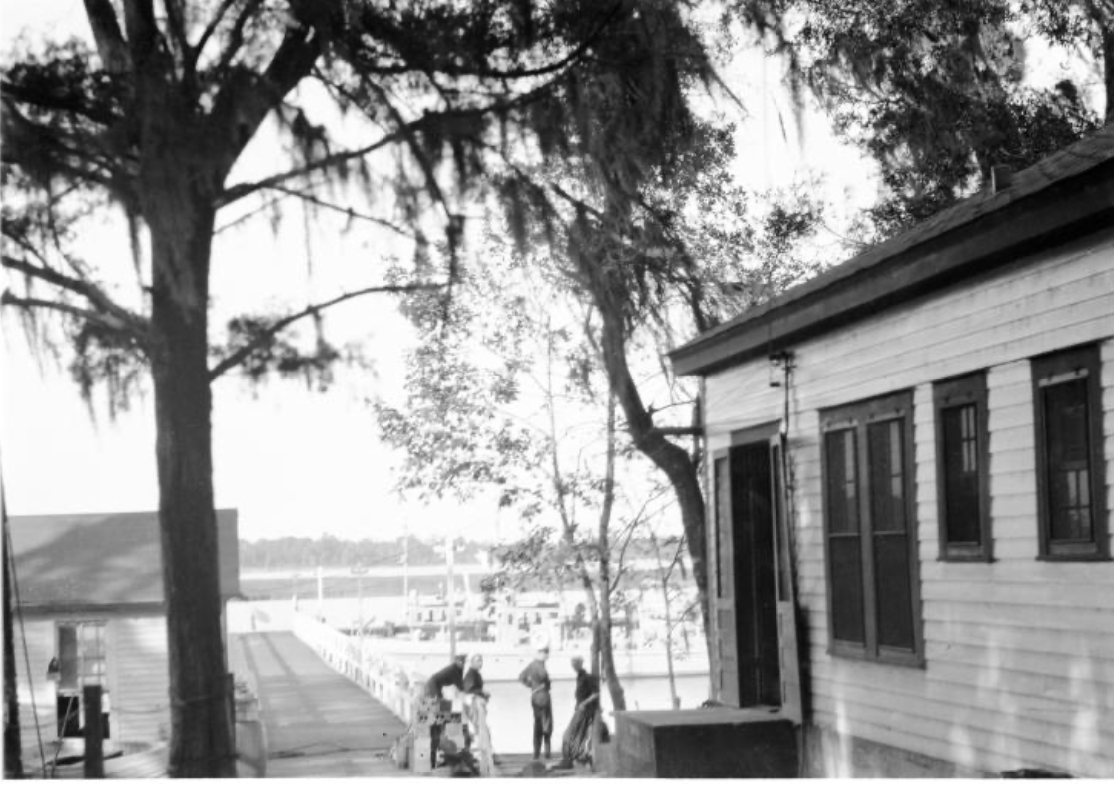
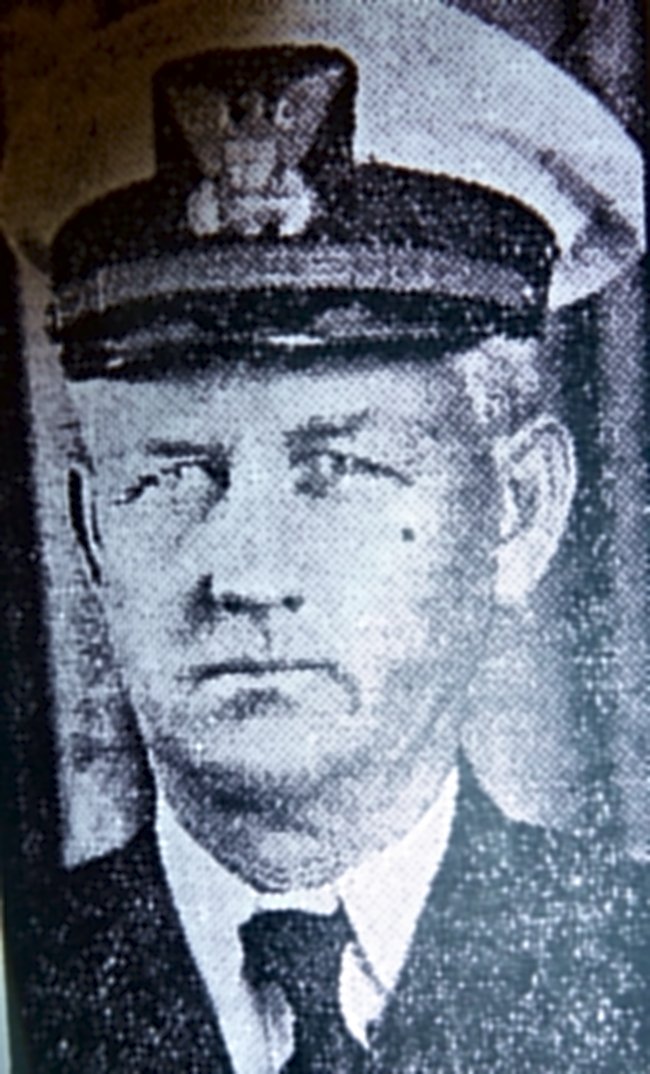
In early April, the U.S. Coast Guard Base, Base No. 15, on Back Bay in Naval Reserve Park was dedicated by Rear Admiral F.C. Billiard (1873-1932), Commandant of the USCG. Captain Samuel P. Edmonds (1867-1943) was in charge of the base until his retirement in 1931.(The Daily Herald, April 8, 1929, p. 1)
Vessels led by Captain Samuel P. Edmonds (1867-1943) from Coast Guard Base 15 at Biloxi were some of the first to go to the Mississippi Delta and last to leave as they assisted flood victims of the disastrous spring flood of the Mississippi River. Biloxi's civilian seamen sent over 400 boats to the inundated regionthat equipped life saving parties with boats, motors, and supplies. These first responders carried food, shoes, and clothing to the stricken while rescuing victims from trees and house tops stranded by the Great Flood. Steve Gorenflo of Biloxi was one for the first releif workers to reach the Delta with Lyle Raymond, T.J. Fountain, Charles Rousseau, L. Crofton, Captain Moran and Voyle F. Moran (1905-1997), his son. Other known Biloxians assisting in the flood zone were: John Dacey, Cleveland Huggins, and Walter White. North Biloxians going to the Delta were: George Mitchel, Thomas Fountain, Paul Trochesett, Benny Yerger, Farrell Bosarge, Walt Walton, and Jules Santa Cruz, et al. (The Daily Herald, May 5, 1927, p 2, May 16, 1927, p.1, June 6, 1927, p. 2, and March 29, 1928, p. 3)
1929
In early April, the U.S. Coast Guard Base, Base No. 15, on Back Bay in Naval Reserve Park was dedicated by Rear Admiral F.C. Billiard (1873-1932), Commandant of the USCG. Captain Samuel P. Edmonds (1867-1943) was in charge of the base until his retirement in 1931.(The Daily Herald, April 8, 1929, p. 1)
1933
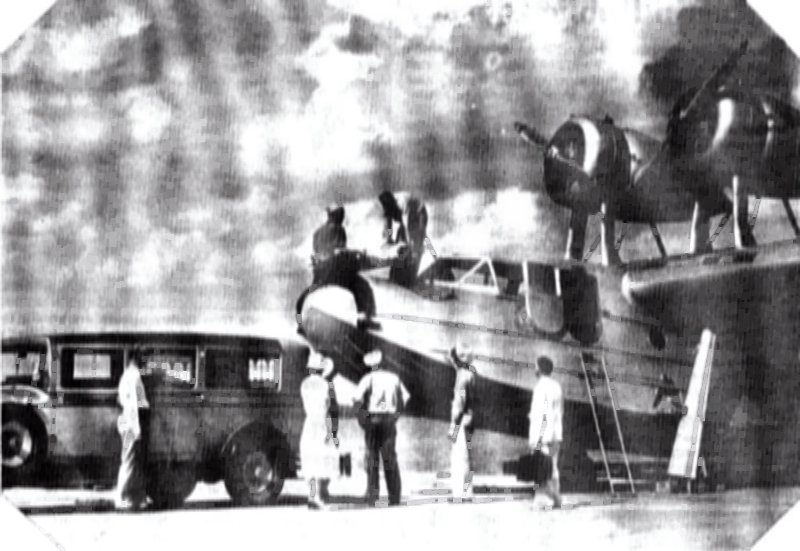
The U.S. Coast Guard begin closing its base at Biloxi. By late June 1933, only three Coast Guard vessels remained in Biloxi.(the Daily Herald, June 2, 1933, p. 9)
REFERENCES:
The Daily Herald,50th Anniversary Souvenir, Golden Jubilee Number, Biographical and Historical 1884-1934, "Samuel Preston Edmonds, Lieutenant Commander U.S. Coast Guard, retired” , (The Daily Herald: Gulfport-Biloxi, Mississippi-1934).
The Daily Herald, ‘Biloxians to honor Coast Guard Sunday’, April 6, 1929.
The Daily Herald, ‘Many inspect Biloxi Coast Guard Base’, April 8, 1929.
The Daily Herald, ‘3 Boats remain at Biloxi Base’, June 2, 1933.
The Jackson County Times, ‘Work to start on Plane Base in two weeks’, November 18, 1933.
The Daily Herald, ‘To purchase land for C.G. Channel’, March 6, 1934.
The Daily Herald, ‘New Coast Guard barracks’, August 9, 1935.
The Daily Herald, ‘Order Hospital plane to Biloxi’, December 30, 1935.
The Daily Herald, ‘Captain Edmonds dies after short illness at Biloxi’, June 21, 1943.
The Daily Herald, ‘Two sisters first Spars to report to Biloxi CG station’, October 16, 1943.
The Daily Herald, ‘New Coast Guard Plane for Biloxi’, July 9, 1953.
The Daily Herald, ‘Wife of former C.G. Commander dies in Florida’, September 21, 1961.
Eight men, described as Jehovah's Witnesses, were arrested in downtown Biloxi on March 1st, a Saturday afternoon, and were subsequently released on $10 bond to appear in city court Wednesday night on charges of disturbing the peace. G.C. Clark, attorney of Waynesboro, Mississippi and representing these seven men, women and several children eight years of age and under related to the press: The Witnesses are active again throughout the nation. Their activities here [Biloxi] incited several young men to chase them along streets calling them names and threatening to run them out of town. No one was hurt, but one Witness shoved a man backwards over a bicycle as he scratched and destroyed a banner bearing these words: 'Abandon religion, serve God and Christ the King. Read Watchtower, 5c."(The Daily Herald, March 3, 1941, p. 6)
Judge John M. Sekul (1911-1984),after a warning for their own personal safety, dismissed several Jehovah Witnesses from the Latimer Community. The Witnesses had been demonstrating in downtown Biloxi and almost caused a riot when citizens became incensed over their placards-one which read 'Down With Religion'. They were also distributing pamphlets.(The Daily Herald, March 6, 1941, p. 1)
The Biloxi Chamber of Commerce pledged $34,000 of the $125,000 required to acquire land for the new technical and training school.(The Daily Herald, March 21, 1941, p. 1)
In March, Biloxi was selected as the site for an Army Air Corps school.(The Jackson County Times, March 22, 1941, p. 1)
In May 1941, the City of Biloxi leased the 685-acre Naval Reserve Park to the Federal Government for an aviation school. In mid-August 1941, 2000 soldiers were living in tents in the Naval Reserve Park.(Harrison Co., Ms. Land Deed Bk. 241, pp. 119-130 and The Daily Herald, August 14, 1941)
In June 1941, the U.S. Army Air Corps activated Station No. 8, Aviation Mechanics School, at Biloxi, Mississippi. By late August 1941, this military installation had been dedicated as Keesler Army Airfield, in honor of 2nd Lieutenant Samuel Reeves Keesler (1896-1918), a native of Greenwood, Mississippi. Lieutenant Keesler had died in France from wounds received while in aerial combat against Germany during the Great War. Keesler Army Airfield not only became technical training center, but trained basic recruits. The first contingent of recruits arrived at Biloxi on August 21, 1941.
In June, a $10 million dollar contract was awarded to the construction companies of F.T. Newton (Hattiesburg), F.S. Glenn (Hattiesburg), J.A. Jones and Bernard Knost (Pass Christian) to erect the Army Air Corps School at Biloxi. Ground was broken on June 18th. The contractors expected to have 2000 men working on the base in two weeks and 10000 laborers in a month.
Byron Patton 'Pat' Harrison (1881-1941) of Gulfport, former Congressman (1911-1919) and US Senator (1919-1941) died in Washington D.C. on the 22nd of June.
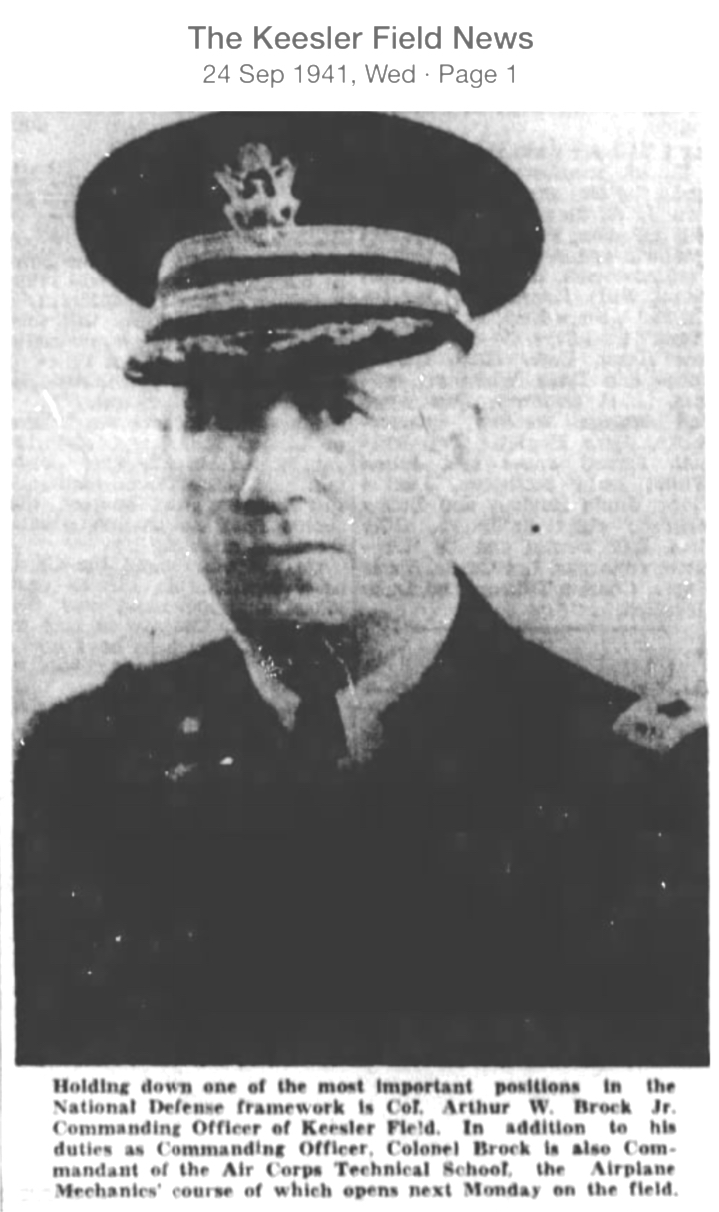
Lt. Colonel Arthur Wellington Brock Jr. (1882-1961) was named Commanding Officer of the Biloxi Army Air Corps Technical School in late June.(The Daily Herald, June 26, 1941, p. 1)
In July, the telephone company announced a $70,000 improvement plan at Biloxi to provide permanent telephone facilities at Keesler Field. A new cable with a 1200 phone line capacity will be laid on the north side of Howard Avenue commencing at Fayard Street to the military base.(The Daily Herald, July 1, 1941, p. 1)
In mid-July, 5809 workers were employed building the air school.(The Jackson County Times, July 19, 1941, p. 1)
On July 22nd, the citizens of Biloxi approved a waterworks bond issue to build a $1,400,000 sewerage system and $209,000 in waterworks improvements.(The Daily Herald, July 24, 1941, p. 1)
By late July, the foundations for 233 buildings had been laid at Keesler Field. The new military base was 6.4% completed and there were 9877 laborers employed in its construction.(The Daily Herald, July 26, 1941, p. 3)
Anthony 'Tony' V. Ragusin (1902-1997), Secretary of the Chamber of Commerce, to enter the Army Air Corps. Ragusin was assigned to Keesler Field as public relations officer.(The Jackson County Times, July 28 1941, p. 1)
The R.P. Farnsworth Company had 250 men working on Harrison Court, a $586,000 defense housing project at Bay Terrace. The final development would consist of eighty-seven buildings to house 175 families with a completion date of January 1942.(The Daily Herald, October 17, 1941, p. 1)
The L&N Railroad has started work on the passenger shed at its Biloxi depot. B.R. Keebler, bridge foreman, has a crew of 20 men building the steel, passenger shed from Reynoir Street to the west end of the Express office, a distance of 350 feet. The project will take three weeks.(The Daily Herald, October 30, 1941, p. 7)
In November, J. Allen Bradford, John T. Collins, Gordon A. Dacey and George Collins Jr. founded Bradford, Collins, Dacey & Collins to provide architectural and engineering services necessary for the completion of the sanitary sewerage system and disposal plant at Biloxi.(Harrison Co., Mississippi Chancery Court Chattel Deed Bk. 79, p. 55)
Tri-State Construction Company of Atlanta was low bidder at $89, 134 to erect the USO recreation center at Biloxi.(The Daily Herald, November 25, 1941, p. 1)
On December 7th, the Empire of Japan attacked Pearl Harbor in the Hawaiian Islands. America declared war on Japan the next day. Germany and Italy sign an alliance with Japan and enter the war on December 11th.
1952
In early October, a USAF T-7, twin-engine, transport aircraft crashed upon take off from KAFB. The plane landed in Back Bay 500 feet south of Brodie Point. Three servicemen died in the accident.(The Daily Herald, October 10, 1952, p. 1)
1955
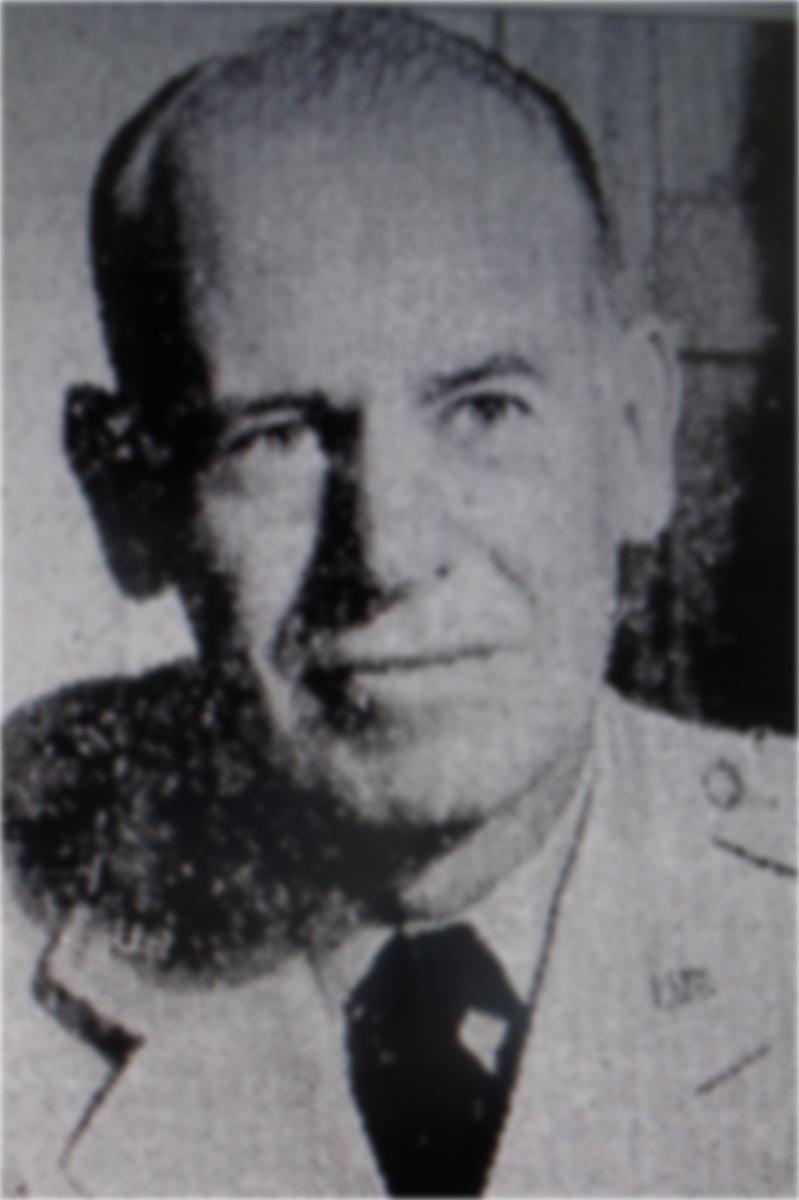
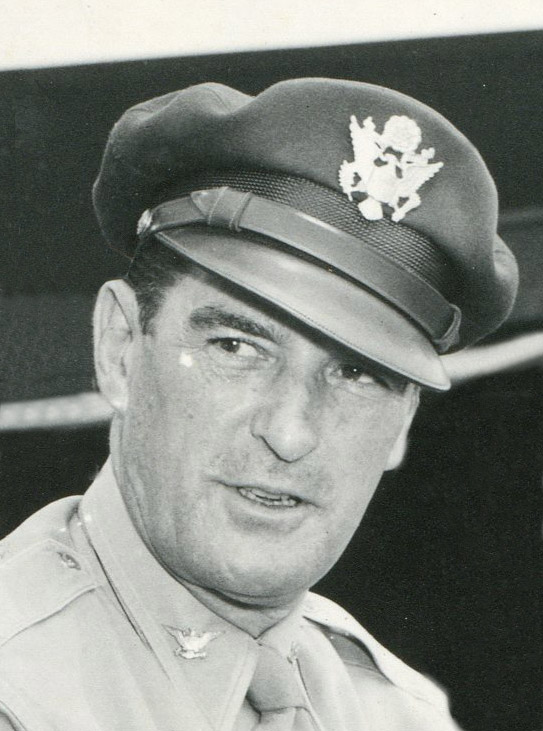
Harlan Clyde Parks
August 1953-April 1955
Major General Harlan Clyde Parks (1906-1987) was born in Selma, Iowa on October 27, 1906. He graduated from Ottumwa High School in Ottumwa, Iowa in 1925. He graduated from the U.S. Military Academy at West Point June 13, 1929. Upon graduation, he was commissioned a second lieutenant in the Coast Artil1ary Corps. From September 1929 to June 1930, General Parks attended Primary Flying School. During the next ten years, he served at various Coast Artillery bases in the United States, Hawaii and the Panama Canal Zone. During this tour, he graduated from the Coast Artillery School (Class of 1936). In Apri1 1941, General Parks was transferred to the Trinidad Sector and Base Command where he served as operations officer and an assistant chief of staff. In June 1943 he entered the Anti-aircraft School, Camp Davis, N.C., completed the course in two months and was assigned operations and training staff officer of the Antiaircraft Training Command Fort Bliss, Texas.
General Parks entered the Army-Navy Staff College in June l944. Upon graduation five months later, he was assigned to the War Department General Staff in tbe G-1 Personnel Division where he served for two years. On June 28, 1946, General Parks was transferred from the Coast Artillery to the Air Force. Five months later, he was assigned to the Strategic Air Command Headquarters at Andrews Air Force Bases, Md., as deputy chief of staff. He attended the Air War College, Maxwell Air Force Base, Ala., from June 1947 to June 1948, after which he was appointed executive officer, Office of the Deputy Chief of Staff for Operations, at Air Force Headquarters. In July 1949 he became director of personnel planning, Office of the Deputy Chief of Staff for Personnel.
General Parks was named commander of Parks Air Force Base, Pleasanton, Calif., in June 1952. He assumed command of the 3380th Technical Wing at Keesler Air Force Base, Mississippi the Electronics Center of the Air Force - on Aug. 20, 1953. On April 6, 1955, General Parks was assigned as senior member of the United Nations Command component of the Military Armistice Commission in Korea. In November of the same year, he joined the Far East Command in Tokyo as assistant chief of staff for personnel.
In December 1956, General Parks became chief of the Army and Air Force Exchange Service with Headquarters in New York City. In his present assignment he is responsible for the worldwide administration of the post exchanges in the Army and base exchanges in the Air Force. General Parks has been awarded the Legion of Merit with two oak leaf clusters, the Commendation Ribbon, the Order of the British Empire, and the Order of Military Merit Taeguk (Republic of Korea). Retired: June 1, 1960. Died: May 4, 1987
Maj. Gen. H.C. Parks Of U.N. Armistice Unit
The New York Times, May 12, 1987
Maj. Gen. Harlan C. Parks, retired, a former senior member of the United Nations Command for the Military Armistice Commission in Korea, died on May 4 of cancer
in Palm Beach, Fla. He was 81 years old and lived in Juneau Beach, Fla. General Parks served with the armistice commission in 1955. He was also assigned to the United Nations Far East Commands in Tokyo as assistant chief of staff, directing personnel. In the last three years of his 31-year military career, he was chief of the Army and Air Force Exchange Service. In that position he was responsible for the administration of a worldwide system of exchanges, or PX's, that provide military personnel and their families with merchandise and services.
General Parks retired from military service in 1960, and then joined the McCann-Erickson advertising firm as a general corporate executive. He was also vice president of the Interpublic Group of Companies, an organization of advertising agencies.
General Parks was born in Selma, Iowa, on Oct. 27, 1906. He was a graduate of the United States Military Academy at West Point, from which he was commissioned as a second lieutenant in June 1929.
He is survived by his wife, the former Catherine Fischer Unger, and two sons, Peter Parks of Manhattan and Dr. Harlan S. Parks of Saratoga, Calif., and three grandchildren. General Parks is to be buried in Arlington National Cemetery on May 27 with full military honors.
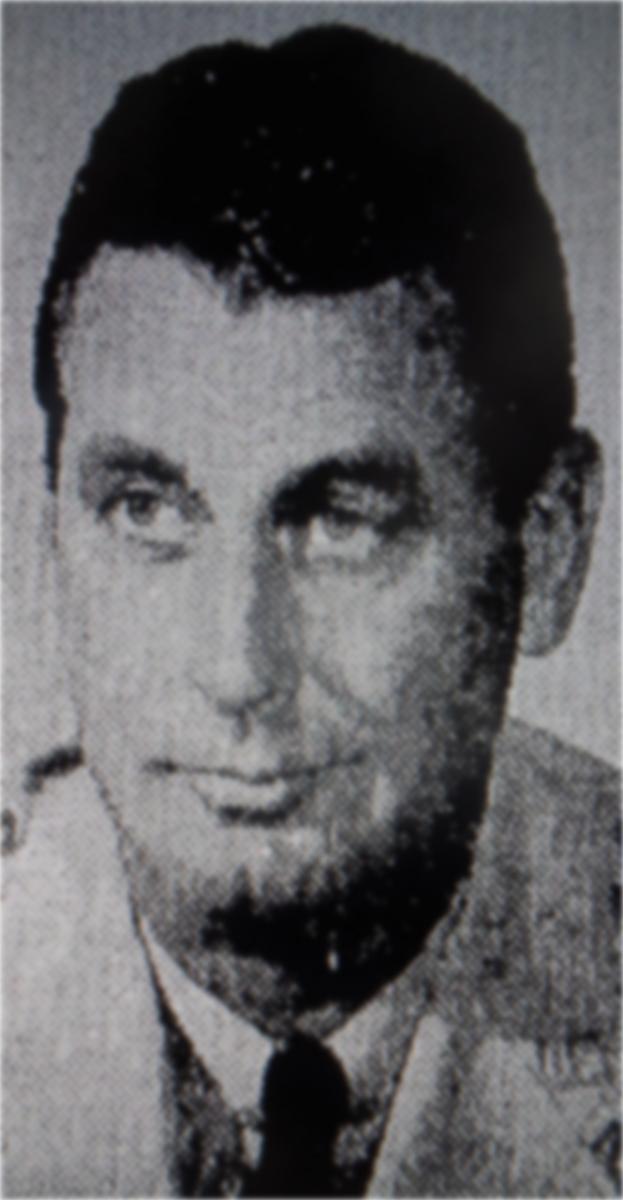
James H. Davies
April 1955-September 1955
Brigadier General James Hubert Davies (1903-1976) was born in Piedmont, California, on October 25, 1903. He graduated from high school there in 1924 and received his Bachelor of Arts degree in social sciences from the University of California in 1928. Commissioned a 2nd Lieutenant in the Air Reserve May 1, 1928, General Davies was appointed a flying cadet the following February. Entering Primary Flying School at March Field, Calif., he graduated from Advanced Flying School at Kelly Field, Texas, May 8 1930, and was commissioned a second lieutenant of Air Corps.
Assigned to the 72nd Bomb Squadron in Hawaii, in March 1932, General Davies was transferred to the Third Attack Group at Fort Crockett, Texas, moving with it to Barksdale Field, La. In October 1936 he joined the 21st Reconnaissance Squadron at Langley Field, Va., and two years later was assigned to the 23rd Composite Group at Maxwell Field, Ala.
Appointed operations officer of the 27th Bomb Group at Savannah, Ga., in March 1941, the following November General Davies assumed command of the group and took it to the Philippine Islands. In February 1942 he was named commander of the Third Bomb Group in the Southwest Pacific, becoming chief of the Bomb Section at the school of Applied Tactics, Orlando, Fla., that November. Returning to the Southwest Pacific in April 1943, he was chief of staff of the Fifth Bomber command. A year later he assumed command of the 313th Bomb Wing at Colorado Springs, Colo., taking it to the Southwest Pacific in January 1945.
Moving to Hamilton Field, Calif., that December, General Davies was assistant chief of staff for operations of the Fourth Air Force. Entering the Air War College at Maxwell Field, Ala., in August 1946, he graduated the following June and became deputy chief of the command section, Air Transport Command, at Gravelly Point, Va. He entered the National War College in August 1948 and graduated the following June.
Joining the Air Training Command, General Davies was deputy chief of staff for personnel at ATRC headquarters, Scott Air Force Base, Ill., becoming chief of staff of the command in May 1950. Assuming command of the 3510th Combat Crew Training Wing, ATRC, at Randolph Air Force Base, San Antonio, Texas, in August 1951 (designated the 3510th Flying Training Wing a year later), in April 1954 [sic] he assumed command of the 3380th Technical Training Wing at Keesler Air Force Base, Mississippi becoming deputy commander that August.
A year later General Davies was named deputy commander of the Alaskan Air Command at Elmendorf Air Force Base, Alaska. His decorations include the Distinguished Service Cross, Silver Star with oak leaf cluster, Legion of Merit and Air Medal with oak leaf cluster. He is rated a command pilot, combat observer and aircraft observer.
General Davies expired on August 20, 1976.
REFERENCES:
The Daily Herald, ‘Parks going to Korea; Davies to command Keesler’, March 18, 1955, p. 1.
The Sacramento Bee, ‘Gibson is named head of Alaskan Air Command’, August 21, 1957, p. C-6.
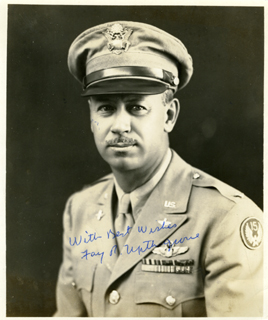
Fay R. Upthegrove
Major General Fay Roscoe Upthegrove (1905-1992) was born in Port Allegheny, Pennsylvania, on January 28,1905. He graduated from the U.S. Military Academy on June 14, 1927 and was commissioned a second lieutenant of Infantry.
That fall General Upthegrove entered Primary Flying School at Brooks Field Texas and graduated from Advanced Flying School at Kelly Field, Texas in October 1928. He then became engineering officer of the 15th Observation Squadron at Selfridge Field, Mich., and in January 1929 was transferred to the Air Force. Entering the Chemical Warfare School at Edgewood Arsenal, Md., a month later, he graduated that April and returned to the 15th Observation Squadron.
Moving to March Field, Calif., in June 1930, General Upthegrove was an instructor at the Primary Flying School. In October 1931 he was named supply officer of the Primary Flying school at Randolph Field, Texas, and the following March was appointed adjutant of the 47th School Squadron there.
Going to Luke Field, Hawaii, in November 1934, General Upthegrove was named flight commander of the Fourth Observation Squadron the following January and assumed command in August 1936. Transferred to Mitchel Field, N.Y., he was assigned duty as operations and intelligence officer of the 99th Bomb Squadron. Entering the Air Corps Tactical School at Maxwell Field, Ala., in May 1939, he graduated that August and returned to Mitchel Field as commander of the 99th Bomb squadron.
Ordered to Langley Field, Va., in December 1940, General Upthegrove became materiel officer of the 22nd Bomb Group, and a month later its executive and operations officer, moving with the bomb group to Jackson Field Miss., several months later. After serving in the Southwest Pacific area from February to April 1942, he assumed command of the 305th Bomb Group at Salt Lake City, Utah. Two months later he took command of the 99th Bomb Group at Davis-Monthan Field, Ariz., taking it to Gowen Field, Idaho, Sioux City, Iowa, and then to North Africa in January 1943. A year later he assumed command of the 304th Bomb Wing, 15th Air Force, in Italy.
Returning to the United States in August 1945, General Upthegrove assumed command of the 76th Flying Training Wing at Smyrna Field, Tenn., and that December took command of the 30th Flying Training Wing at Turner Field, Ga. In May 1946 he was designated commanding general of Chanute Field, Ill. Transferred to U.S. Air Forces in Europe at Wiesbaden, Germany, in November 1948, the following month he assumed command of the 7l00th Headquarters Command Wing, USAFE.
Joining the Strategic Air Command in June 1951, General Upthegrove became deputy commander of the Second Air Force at Barksdale Air Force Base, La., becoming commander of the Fourth Air Division there in October 1952. The following January he assumed command of the 20th Air Force, Far East Air Forces on Okinawa, and on March 1, 1955, assumed command of the 313th Air Division, FEAF.
Transferring to the Air Training Command on Sept. 1, 1955, General Upthegrove assumed command of the 3380th Technical Training Wing at Keesler Air Force Base, Mississippi.
His decorations include the Distinguished Service Medal, Silver Star, Distinguished Flying Cross with oak leaf cluster and Air Medal with 10 oak leaf clusters. He is rated a command pilot, combat observer and senior aircraft observer. General Upthegrove retired from the USAF July 31, 1957. He expired on January 8, 1992. He had married Marcella Gertrude Driscoll (1901-1970). Their corporal remains were interred in the St. Bonaventure Cemetery at Olean, New York.
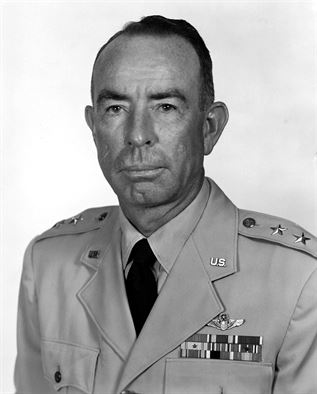
Brig. General Daniel Webster Jenkins (1907-1989)
Brig. General Daniel Webster Jenkins (1907-1989), native of Floydada, Texas and Commander of the Air Ground Operations School, located at Southern Pines, North Carolina, announced in late January that the school would relocate to KAFB in mid-February. The school building in North Carolina had burned on January 20th. Major General Jenkins died on March 25, 1989 and his corporal remains interred at St. Petersburg, Florida.(The Daily herald, January 31, 1957, p. 1)
1960
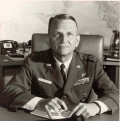
_0.jpg)
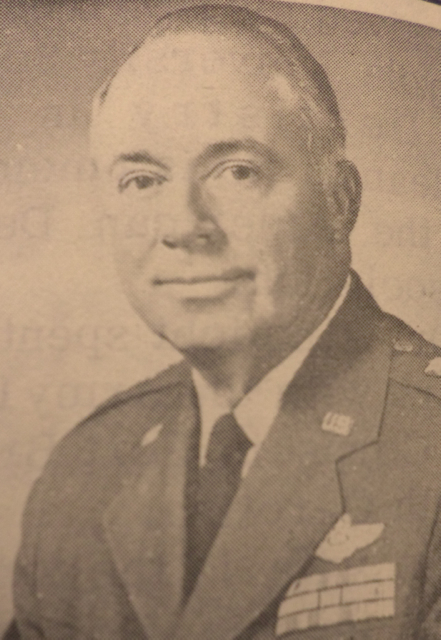
Dale M. Titler and SSgt. Gary M. Murphy, Keesler Field: Inception to Pearl Harbor 1939-1941, (USAF, Office of History, 81st Training Wing, Keesler AFB Technical Training Center: Biloxi, Mississippi-April 1981).
Dale M. Titler, Gulf Tempest: Major Hurricanes and Their Effects on Keesler Technical Center, (USAF, Office of History, 81st Training Wing, Keesler AFB Technical Training Center: Biloxi, Mississippi-1986).
Journals
The Daily Herald, 'General Rush to remain short time longer at Keesler', February 12, 1947.
The Daily Herald, 'Helicopter Air Training may come to Keesler', February 18, 1949.
The Daily Herald, 'Israel WAF is Keesler student', April 5, 1952.
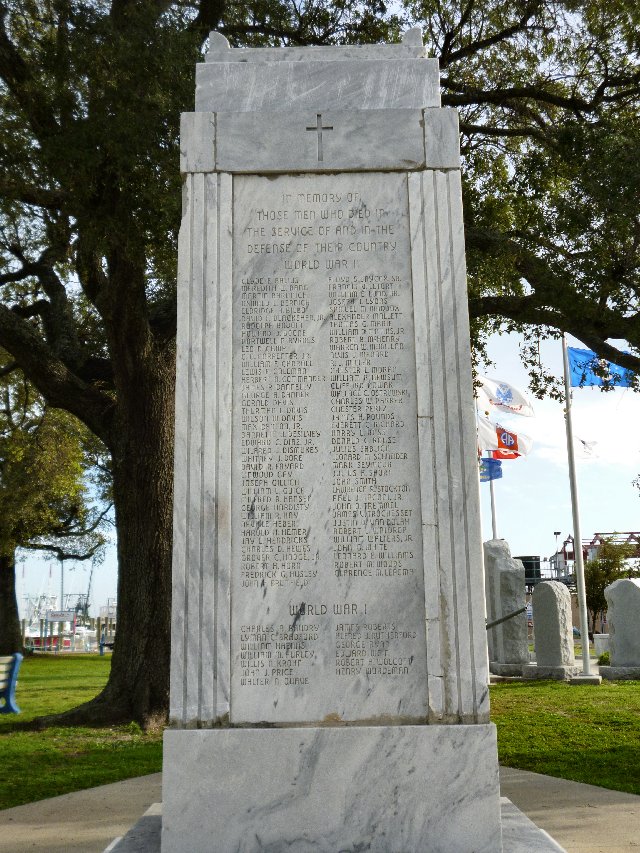
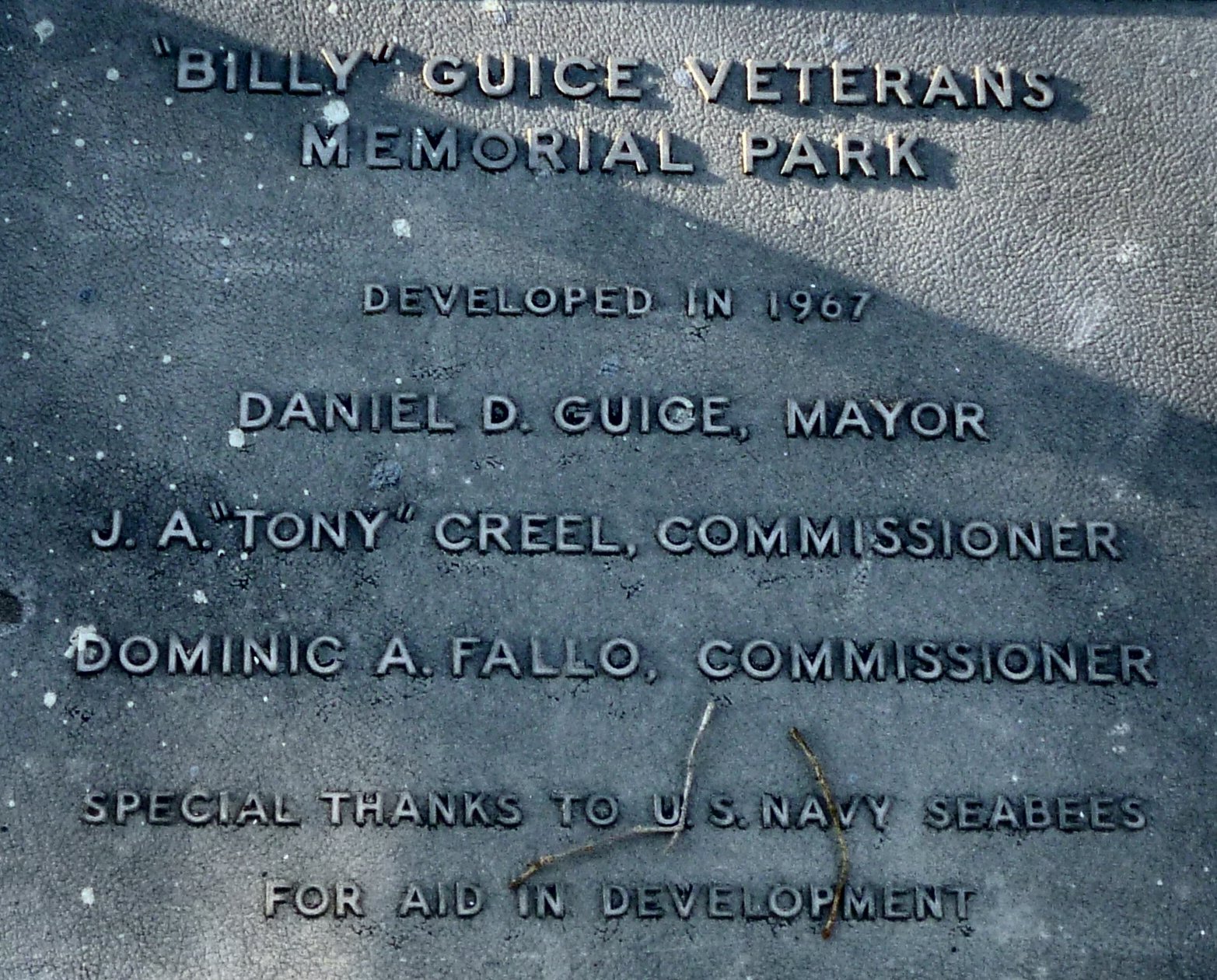
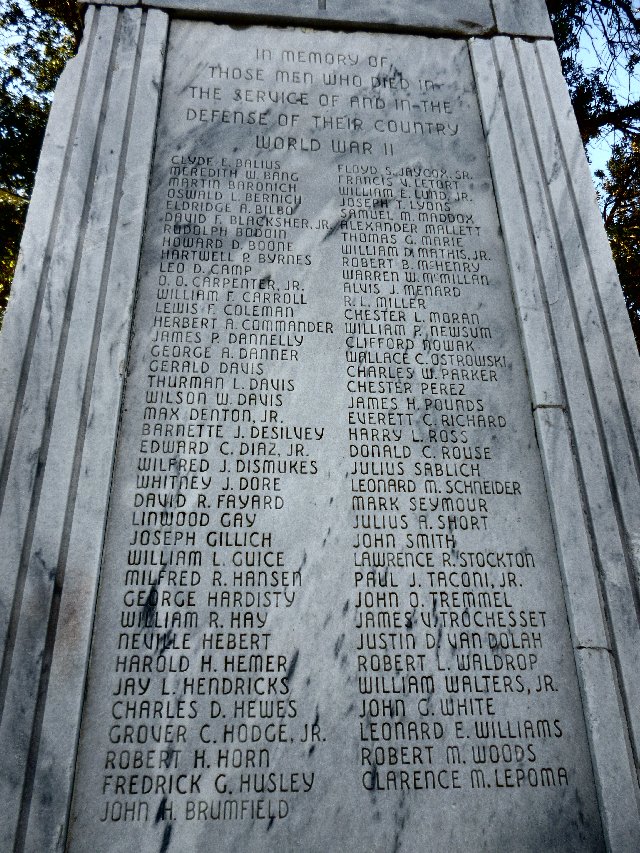
WORLD WAR II MEMORIAL
[dedicated on December 7, 1947 and donated by William Lee Guice (1887-1971)]
[ 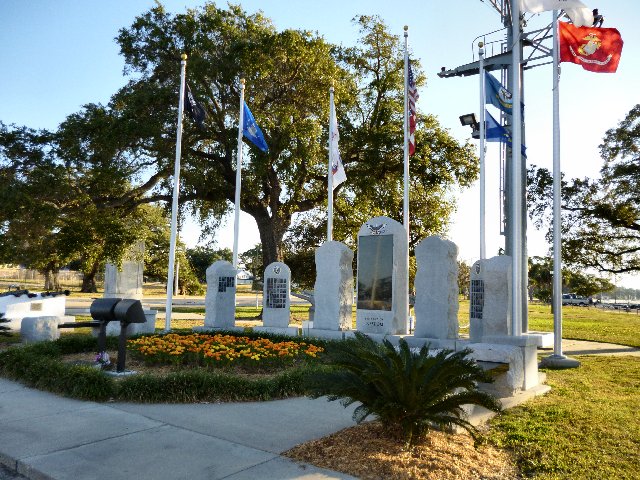

PURPLE HEART MEMORIAL USS BILOXI MAST
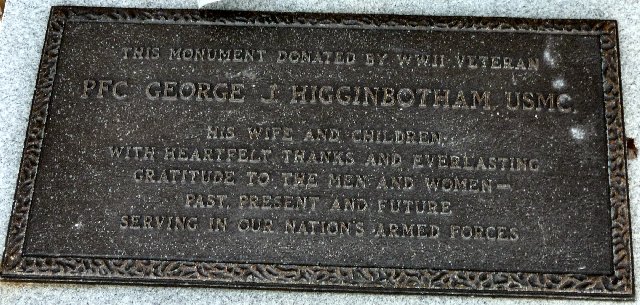
PFC GEORGE J. HIGGINBOTHAM, USMC WAS WOUNDED AT IWO JIMA ON
1942
Marian Desporte Winland , wife of Sgt. Ralph H. Winland (1917-2002) and daughter of Mr. and Mrs. Ernest Desporte, and living at 203 Magnolia Street joined the WAAC auxilliary in October 1942. She went to Camp Shelby for examinations and interviews. She will go to Des Moines, Iowa for basic training and get her uniforms.(The Daily Herald, October 7, 1942, p. 2)
1943
_0.jpg)
Elbert Lester Dukate II (1919-1986) enlisted in the US Army as a Private in December 1941 at El Paso, Texas. He graduated in June 1942 from Signal Corps training at Camp Roberts, California. Elbert then transferred to the Army Air Corps and began pilot cadet training in July 1942,and completed fifty hours of solo flying and was promoted to 1st Lieutenant in the cadet corps at Ontario, California. DuKate received his wings on March 10, 1943 at La Junta, Colorado(The Daily Herald, October 20, 1942, p. 7)
Ploesti Raid
Lt. DuKate was sent to England and flew several combat over Frankfort and Hamburg, Germany. In July 1943, he transferred to Libya with the 44th Bomb Group-67th Squadron of the 8th Air Force. On August 1, 1943, he was co-pilot of the ‘Available Jones’, a B-24 Liberator bomber, that participated in Operation Tidal Wave that sent hundreds of American bombers to destroy German-held, oil refineries at Ploesti, Romania. Referred to in USAF history as ‘Black Sunday’, the US Army Air Force lost 53 aircraft and 660 airmen in the raid.
Sgt. Leo Spann, engineer from Chapman, Alabama, described the mission: “We approached the target down the railroad track at a very low altitude of approximately 100 feet. Our target was already on fire as some other Group [the 93rd] had already bombed it. We went through the smoke and fire, dropping our bombs on our designated spot. We then went down on the deck as low as we could, as those picturesque hay stacks opened up and then revealed their guns – and these guns started giving us hell. They shot out the #4 engine and a shell exploded between the two waist gun positions, wounding both gunners in the legs. I was the engineer and operated the top turret and I had a complete view of what was going on. I saw one plane that had gone in with the wheels up in a field and all of that crew was outside of the plane.
“We broke one balloon cable and I was looking directly at it when we collided with it. I saw another B-24 climb straight up until it stalled, and just as it “fell out” I saw one parachute come out and open just before it hit the ground. I talked later to this boy (Bernard Traudt) as he came into the prison camp where I was.
“We lost speed and dropped out of formation, and the fighters jumped us. With the two waist gunners out, they came in so close to us it seemed we could almost touch them. We figured that we had shot down four of them, and they finally left us, but the #4 engine had frozen up and with a flat propeller, it caused a hellava drag. The propeller would not feather!
“We started trying to gain altitude to clear the mountains ahead. Threw out everything that wasn’t tied down – all of the guns, ammunition, equipment, etc. When we finally arrived at the coast, our #3 engine was failing. The oil pressure was almost gone and the temperature was much too high. Lt. Jones asked me how long I thought it would last and I estimated about 30 minutes at the most. We decided to feather #3 engine and see if we could fly with the other two, but they were on the same side! If we couldn’t fly, we were going to ditch it on the beach.
“I feathered the prop, Jones and Dukate got the plane leveled out, but we could not maintain our altitude. So we began making plans to ditch. We flew onward for approximately forty-five minutes before we were forced to ditch – the time was about 1840 – at least that is the time that my watch stopped. We all managed to get out of the plane and into our life rafts, even though the tail gunner and the navigator were slightly injured in the ditching.
“The next morning a German submarine came by, started to help us, changed their minds and took off, leaving us. Then, at approximately 1500 hours, a three-engined Italian seaplane sighted us, landed and picked us up and took us to Brindisi, Italy and to the hospital there. “Later that same night, Jones, Dukate, Bernard, Paolillo and myself were put on a train and sent into the mountains – to an old monastery. Much later, both Sigle and Dukate managed to escape, with Sigle getting back to the States in about two months.” [www.greenharbor.com/ROHPDF/ROHAU43.pdf]
Fred B. Ferson and Paul Linde, formerly of Tennessee, have given up their jobs to work full time to produce high quality prisms for use by the military as range finders for tanks, ships and large artillery pieces for the Franklin Arsenal. They are assisted in their shop by J.R. McElroy and J.L. McKenzie. Since 1941, the government has given contracts to amateur lens makers to help eliminate the paucity of roof prism manufacturing in America.(The Daily Herald, August 4, 1943, p. 8)
An AT-7, Army Air Corps, trainer from the Army Air Forces navagation school at Hondo, texas crashed into the Gulf of Mexico three miles southwest of Biloxi, Mississipi on August 25th. The plane had just taken off from Keesler Field on a routine training flight. The pilot and three cadets were killed.(The Daily Herald, August 26, 1943, p. 1)
The first SPARS to report to the USCG Biloxi Air Station arrived in mid-October 1943. They were two sisters, Ensigns Alice Saunders and Mary Saunders, natives of St. Cloud, Minnesota and graduates of St. Cloud Teachers' College. Both ladies were school teachers in St. Cloud before entering the Coast Guard women's reserves. Their military training took them to Smith College at Northampton, Massachusetts and the Coast Guard Academy at New London, Connecticut.(The Daily Herald, October 16, 1943, p. 1)
_3.jpg)
Martin P. Baronich Jr.
Martin Paul Baronich Jr. (1922-1943) made his livelihood like his father fishing for the local seafood canneries while living at 223 Sophie Street in East Biloxi. He enlisted in the USCG and was on active duty as a 1stClass Fireman aboard the USS Serpens (AK-97), a cargo ship, when he was killed on October 15, 1943. The USS Serpens was lost with two hundred-fifty men in late January 1945 while loading ammunitions and depth charges at Guadalcanal in the Solomon Islands. Martin’s corporal remains were returned from the South Pacific via San Francisco to Biloxi, Mississippi in October 1947, after WW II for internment in the Southern Memorial Park cemetery. His funeral was held at the Bradford Funeral Home with full military honors on October 26, 1947.(The Daily Herald, October 25, 1943, p. 2 and October 27, 1947, p. 1)
Father J.P. McGlade, pastor of St. John's Catholic Church, announced that three Parish soldiers who were killed in the recent war effort would be honored in a sermon by Father J.L. Maurer, SSJ, pastor of Our Mother of Sorrow Church, on November 14th. Remembered were: Sgt. James Velcich Trochesset, US Army AF, son of Mr. and Mrs. Albert Trochesset killed in a plane crash on September 5, 1942; Seaman 2nd Class Wilfred Jules Dismukes, US Navy, son of Mr. and Mrs. Frank Dismukes, killed in action May 8, 1942; and Fireman 2nd Class, Leonard Mark Schneider, US Navy, son of Mr. and Mrs.Chester Schneider, missing in action April 22, 1943.(The Daily Herald, November 2, 1943, p. 5)
Julia K. Wendt (1892-1985), owner of Gunston Hall on Biloxi's West Beach, was reported by Katherine herr of the Herr Realty Company of Gulfport, Mississippi to be a Japanese POW at Santo Tomas University at Manila, Philippines Islands. Mrs. Wendt was reported to be "in excellent health and engaged in various camp activities. Her latest assignment beginning on a vegetable detail."(The Daily Herald, December 13, 1943, p. 10)
1944
Captain Oswald L. Bernich (1915-1944), son of Matthew L. Bernich (1890-1951) and Jessie Inez Scarborough Bernich (1895-1979), was killed on February 12, 1944 20 miles east of Ardmore, Oklahoma in a B-29 Superfortress crash.(The Daily Herald, February 24, 1944, p. 5 and Feebruary 16, 1944, p. 8)
Joseph "Bee" F. Hungerford [1920-2008]
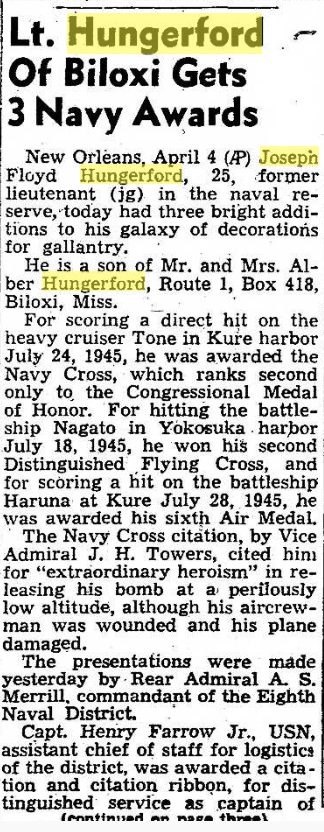
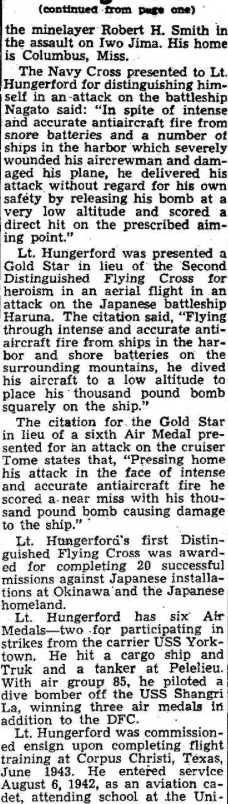
[The Daily Herald, April 4, 1946, p. 1 and p. 3]
John Joseph Labetich (1909-1944) died at the Presidio, US Army Camp, in San Francisco, California on February 20, 1944. He had married Dina Mary Mladinich (1914-2006) in Harrison Couty, Mississppi on September 12, 1934 . They had one daughter, Frances Labetich m. Gus C. Cavalier Jr. (1933-2005). John J. Labetich's corporal remains were interred in the Biloxi Cemetery.(The Daily Herald, February 21, 1944, p. 7 and March 1, 1944, p. 8 and The Sun Herald, October 7, 2006)
Sgt. John Smith (1920-1944), USMC, son of Emellda Smith of 1312 First Street, was killed at Saipan, Marianas Islands on June 23, 1944. Smith had been employed by the Mavar Packing Company and Viator's Grocery and had enlsited in the USMC circa 1937.(The Daily Herlad, September 2, 1944, p. 1)
Charles Diaz, son of Mabel Diaz, Crawford Street, Biloxi, was killed in action in New Guinea on July 31, 1944.(The Daily Herald, September 1, 1944, p. 5)
1945
Edward 'Eddie' E. Lemien (1925-2009), Jehovah Witness, stated in Federal Court at Biloxi that he was an ordained minister since childhood and did not believe in war. Lemien had failed to report for induction into military service and claimed that he had filed an appeal which he had never gotten a reply. Judge Sidney C. Mize instructed the jury to find for the defendant.(The Daily Herald, February 21, 1945, p. 1)
Marine Sgt. Sidney A. Freudenstein Jr., son of Mr. and Mrs. Sidney A. Freudenstein, 626 West Beach, Biloxi, Twin Oaks Cottages, was killed on May 19, 1944 at Okinawa. He had married Alice Williams in September 1943. Sidney A. Freudenstein III was born at NOLA a few days before his father's demise.(The Daily Herald, May 28, 1945)
Michelina Trebotich (1891-1978), native of Croatia and widow of George Trebotich, had six sons serving in the US armed forces: Steve Trebotich (1916-2010)-US Coast Guard; Joseph M. Trebotich (1917-1996)-OSN; George Trebotich-US Army Air Corps; John L. Trebotich (1920-2003)-US Army; Louis J. Trebotich (1923-2004)-USN; andPeter B. Trebotich (1926-2006)-US Army. Madeline Trebotich (1924-2006), a daughter, who married Ernest Keenan, was employed at Keesler Field.(The Daily Herald, September 11, 1945, p. 3)
Lt. Colonel Eugene A. Peresich Jr., age 25, 641 Lameuse Street, Biloxi former commander of a B-27 squadron in the ETO, has been released from active duty at the separation center at Drew Field, Florida. Colonel Peresich served with the 8th Air Force from May 1944 to June 1945, participating in the heavy air offensive during the land invasion of Europe. He flew 29 combat missions and was awarded the DFC with Oak Leaf Cluster and the Air Medal with three clusters. He also holds the American Defense Medal and the European Theater ribbon with six battle stars. Colonel Peresich enlisted as an aviation cadet in February 1941, while a student at LSU. he was graduated a second lieutenant from the flying school at Craig Field, Alabama in Seeptember 1941. His last duty station in the United States was 3rd Air Force Headquarters at Tampa, Florida. He is now active as vice president of Eugene Peresich and Sons Inc., general insurance agency, and will travel throughout Mississippi, but will make his headquarters in Biloxi.(The Daily Herald, October 11, 1945, p. 8)
1947
June 1947-The Lyman C. Bradford Post, VFW began planning for a memorial park between Lameuse and Main Street to honor Biloxians who lost their lives in WWI and WWI. The memorial was to cost $3500 and will be donated anonymously by a local citizen.(The Daily Herald, June 5, 1947, p. 13) .
December 1947-The new WW I and WW II memorial on East Beach donated by William Lee Guice (1887-1971) and Lee Dicks Guice (1892-1961), his wife, through the auspices of the V.F.W. was dedicated on December 7th.(The Daily Herald, December 5, 1947, p. 4)
REFERENCES:
The Daily Herald, “Biloxi youth [Fred A. Tucei] writes of first jump as paratroopers in US Army”, June 19, 1942, p. 5.
The Daily Herald, “Bombardier student [John Oswald Bernich (1923-1997)] tells of experiences”, June 26, 1942, p. 7.
The Daily Herald, “Biloxian [Lt. (jg) August Al Barthes (1916-2007)] tells of victory at Midway”, June 27, 1942.
The Daily Herald, “Lions hear Biloxians [P.J. Gill and Curtis Allen] who were in battle ”, July 29, 1943.
The Daily Herald, “[Frank Roberts] Tells of fighting Italians in Sicily”, August 24, 1943.
The Daily Herald, “[Stephen] Guice tells of Marines battling on Guadalcanal”, August 25, 1943.
The Daily Herald, "Two sisters first SPARS to report to Biloxi Coast Guard Station", October 16, 1943, p. 1.
The Daily Herald, “Captain Bernich on first bombing flight to Rome”, October 20, 1943, p. 2.
The Daily Herald, “Martin Baronich dies in South Pacific”, October 25, 1943..
The Daily Herald, “Fr. maurer to be Memorial speaker", November 12, 1943, p. 5.
The Daily Herald, “Eddie R. Migues [1916-2003] doubles as mule skinner”, December 1, 1943, p. 1.
The Daily Herald, “Biloxi resident [Julia Wendt] is Japanese prisoner", December 13, 1943, p. 10.
The Daily Herald, "Capt. Bernich killed in crash of plane", February 14, 1944, p. 5.
The Daily Herald, "Bernich funeral will be tomorrow", Febraury 16, 1944, p. 8.
The Daily Herald, “John L. Labetich died in Army Camp”, February 21, 1944, p. 7.
The Daily Herald, “Labetich funeral Thursday afternoon”, March 1, 1944, p. 8.
The Daily Herald, “Tell of action of Biloxi Battery [114th Field Artillery-NG] on Italian war front”, April 4, 1944, p. 7.
The Daily Herald, "Veteran [Curtis T. Parker] of Seven Battles tells of reactions overseas”, May 26, 1944, p. 6.
The Daily Herald, “Tony Pitalo tells of life in German war prisoner camp”, May 29, 1945, p. 1.
The Daily Herald, “Advance efforts for Memorial park on Biloxi Beach Front”, June 5, 1947, p. 13.
The Daily Herald, “Memorial Dedication [photo]”, December 5, 1947, p. 4.
The Daily Herald, “”, 19.
The Daily Herald, “Six sons serving in Armed Forces”, September 11, 1945, p. 3.
The Jackson County Times, “German prisoners to be used in wood cutting”, February 24, 1944, p. 1.
The Jackson County Times, “15,600 German prisoners of war based in State”, July 7, 1945, p. 1.
The Daily Herald, “Cpl. Carver arrives in Biloxi tonight”, November 11, 1951.
The Daily Herald, “Cpl. Carver home on 30-day leave”, November 11, 1951.
_________________________________________________________________________________
- Printer-friendly version
- 4654 views